Slab Leak Detection & Repair in Phoenix, AZ
When a copper line under your slab starts pinholing, every day of delay costs you more water, more damage, and more drywall dust. Phoenix is one of the toughest markets in the country for under-slab plumbing: summer attic and soil temperatures push well past 110 degrees, the municipal water is famously hard, and the alkaline desert soil around your foundation is corrosive to copper. That combination is why slab leaks are so common across the Valley, from 1960s ranch homes in Arcadia and Maryvale to newer stucco tracts in Desert Ridge and Ahwatukee. Our Phoenix slab leak specialists arrive with electronic acoustic equipment and thermal imaging cameras, pinpoint the leak within inches, and lay out your repair options with upfront pricing before any concrete is touched. Whether the fix is a surgical spot repair, a tunnel, or a clean overhead reroute, you get a permanent solution backed by a written warranty. If your water bill just spiked or a warm spot appeared on your tile, call now for same-day slab leak detection in Phoenix.
Neighborhoods We Serve in Phoenix
Arcadia, Biltmore, Desert Ridge, Ahwatukee, Sunnyslope, Maryvale, Encanto, Roosevelt, Moon Valley, Camelback East — and every ZIP code in between.
Why Phoenix Homes Get Slab Leaks
Phoenix sits on a mix of sandy loam, decomposed granite, and caliche, the cemented calcium-carbonate hardpan that underlies much of the Valley. Soil here is alkaline and corrosive to copper from the outside in, which is why pinhole leaks are the dominant slab-leak story in the city. Slab-on-grade construction is nearly universal and basements are rare, so copper lines run directly through or beneath concrete. Combined with extreme summer heat that drives thermal expansion of pipes, the soil chemistry steadily eats at older copper until pinholes form.
Signs of a Slab Leak in Phoenix Homes
The earliest sign most Phoenix homeowners notice is a water bill that climbs for no reason. The City of Phoenix uses tiered summer rates, so even a modest under-slab leak can push you into an expensive bracket fast. Check your meter: with every fixture off, watch the small leak-indicator dial for ten minutes. If it moves, water is escaping somewhere, and in a slab-on-grade home the slab is the prime suspect. Warm or hot spots on tile or wood floors are the classic hot-water-line signal. In winter, when the slab cools at night, a leaking hot line feels unmistakable under bare feet; in summer, run the test early in the morning before the ambient heat masks it. The sound of running water when nothing is on, especially faint hissing near a bathroom or kitchen wall, points to a pressurized line leak. Look for flooring clues too: buckling laminate, grout that stays damp, or tile that suddenly feels hollow. Musty odors, baseboard warping, and mysterious wet spots in the carpet are all red flags. Outside, watch for unusually green patches of grass or settling soil along the foundation line, and check your water heater: a unit that cycles constantly may be feeding a hot-side slab leak. In older neighborhoods like Arcadia, Encanto, and Maryvale, where original 1960s and 70s copper is now decades past its prime, we often find multiple pinholes on the same run, so one repair may not be the end of the story. Catching the first sign early is the difference between a contained spot repair and a tunneling project.
Why Phoenix Homes Get Slab Leaks
Phoenix deals out a uniquely harsh hand to under-slab copper. First, the heat. Summer soil temperatures around a foundation routinely exceed 110 degrees, and copper lines expand with every hot cycle and contract as they cool. Decades of this daily thermal cycling work joints loose and fatigue the pipe walls, especially at bends and fittings. Second, the water and soil chemistry. Phoenix municipal water is among the hardest in the country, loaded with dissolved minerals, and the surrounding soil is alkaline and corrosive. Hard water attacks copper from the inside while alkaline soil attacks it from the outside, a two-front assault that thins walls until pinholes open. This is the number-one failure mode we see in the Valley. Third, the housing stock. Arcadia, Maryvale, Sunnyslope, and Encanto are full of 1960s through 1980s homes plumbed with copper that is now 40 to 60 years old, right in the failure window. Caliche, the rock-hard calcium carbonate layer under much of the city, complicates things further: it does not drain well, so any leaking water can pool against the slab instead of dispersing. Add the urban heat island effect, which keeps overnight temperatures high in central neighborhoods, and copper lines never really get a thermal rest. Even newer Desert Ridge and Ahwatukee homes are not immune, since long copper runs under large footprints multiply the exposure. Understanding why the leak happened also tells you whether a single spot repair will hold or a reroute is the smarter long-term play.
How We Detect Slab Leaks in Phoenix
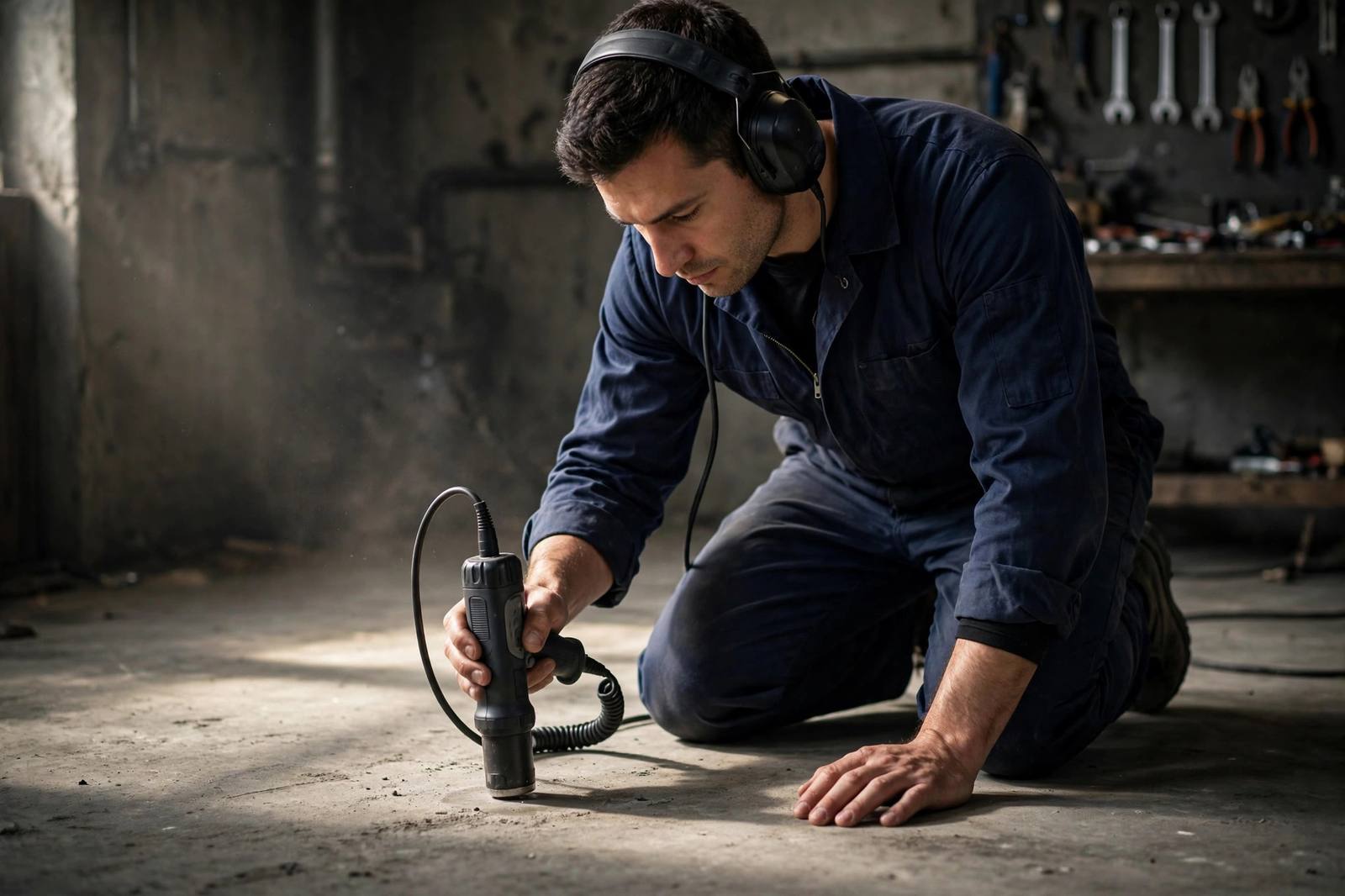
Guessing is expensive, so we do not guess. Our Phoenix slab leak detection starts with a pressure test that isolates your hot and cold lines, telling us which side is losing water before we ever pick up a listening device. From there we use electronic acoustic listening equipment, sensitive ground microphones and correlators that pick up the distinct signature of pressurized water escaping through a pinhole. Because Valley summers bake the slab, we often pair acoustics with thermal imaging: an infrared camera reads the slab surface and maps the warm plume spreading from a hot-line leak, narrowing the search to a small area. For cold lines and drain-side questions, we trace the line path with electromagnetic locators and confirm with targeted moisture meters along baseboards and flooring. The goal is to mark the leak within inches so the repair crew opens the smallest possible area of concrete. A full detection visit typically takes one to two hours, and you get a written finding with the leak location, the line involved, photos, and repair options with firm pricing. We serve every corner of the city, from rooftop decks in Camelback East to single-story ranches in Moon Valley, and same-day appointments are the norm. Accurate detection is what separates a one-day spot repair from a week of exploratory demolition, which is exactly why the diagnostic step matters more than the jackhammer.
Slab Leak Repair Options in Phoenix
Once the leak is pinpointed, you generally have three paths, and the right one depends on the pipe's age, how many leaks have already appeared, and what sits above the slab. A spot repair is the surgical option: we open a small section of concrete directly over the leak, cut out the failed section, and splice in new copper or PEX. It is fast, often finished in a day, and makes sense when the rest of the line tests healthy. Tunneling is the choice when you have expensive flooring you want to preserve. Instead of breaking through tile, travertine, or hardwood from above, technicians hand-dig a tunnel beneath the slab to reach the pipe from the side, repair it, and backfill. It costs more and takes longer, but your floors stay intact, which matters in Biltmore and Arcadia homes with high-end finishes. The third option, and the most popular long-term fix in Phoenix, is an overhead reroute. We abandon the failing under-slab line entirely and run new PEX through the attic and walls, bypassing the slab. Because the corrosive soil is the root cause here, a reroute removes the pipe from the hostile environment altogether. For homes with recurring pinholes, a whole-home repipe through the attic is often cheaper than chasing leaks one by one. We walk you through the trade-offs of each method, including how each affects your flooring, your timeline, and your warranty, so the decision is yours with full information.
What Slab Leak Detection & Repair Costs in Phoenix
A professional slab leak detection visit in Phoenix typically runs $195 to $450, depending on the size of the home and how many lines need testing. That fee buys you the acoustic survey, thermal imaging, pressure testing, and a written report with the leak marked and repair options priced. Spot repairs generally fall between $2,100 and $4,000 for a single accessible leak, including concrete removal, the pipe repair, backfill, and a basic concrete patch. Tunneling adds labor, usually landing in the $3,500 to $6,500 range for a single leak, because hand-digging under a slab is slow, careful work. An overhead reroute of one line often costs $2,500 to $4,500, while a full whole-home repipe through the attic runs $5,000 to $12,000 depending on the home's size and fixture count. Phoenix-specific cost drivers include caliche: if the soil under your slab is cemented hardpan, excavation takes longer. Summer scheduling can also matter, since attic reroute work in 150-degree attics requires early-morning crews. What should not drive the price is uncertainty: be wary of any quote given before electronic detection confirms the leak's location. A reputable company prices from a marked spot, not a hunch. We provide firm, written pricing before work begins, and we will tell you honestly when a $300 detection and a $3,000 reroute beats a $2,500 spot repair that the same soil will eat again in two years.
What to Do When You Suspect a Slab Leak
First, confirm you actually have a leak. Turn off every faucet, appliance, and irrigation valve, then watch your water meter for 15 minutes. If the dial moves, you are losing water. Next, find your main shutoff valve, usually near the front hose bib or in the garage, and make sure you can turn it. You do not need to shut the water off immediately for a small leak, but knowing how is essential in case it worsens. Document what you see: photograph damp spots, note which rooms feel warm underfoot, and pull your last few water bills to show the spike. This documentation helps both your plumber and, if you file a claim, your insurance adjuster. Call a slab leak specialist rather than a general handyman; you need electronic detection, not exploratory demolition. While you wait, avoid running hot water unnecessarily if the leak is on the hot side, and move valuables off floors that feel damp. Do not ignore it hoping it seals itself: pressurized pinholes only grow, and in Phoenix's heat, trapped moisture under flooring can turn into a mold problem within days. Also resist the urge to let anyone break concrete before the leak is electronically located. The correct sequence is detect, then repair, and a same-day detection appointment in Phoenix usually means you have a firm repair plan within 24 hours.
Get a Pinpoint Diagnosis in Phoenix
No jackhammer guesswork. Thermal imaging + acoustic equipment finds your leak within inches.
☎ Call (877) 762-1902Phoenix Slab Leak FAQs
How do I know if I have a slab leak or just a high water bill?
Do the meter test: shut off all water inside and out, then watch the meter's leak indicator for 10 to 15 minutes. Movement means water is escaping. Pair that with physical clues like warm spots on floors, the sound of running water, or damp baseboards. In Phoenix, summer irrigation can mask a leak, so test with the irrigation controller off to isolate indoor plumbing.
Are slab leaks common in Phoenix?
Yes, Phoenix is one of the highest-risk metros in the country. Extreme summer heat causes constant thermal cycling of copper lines, the water is very hard, and the alkaline soil corrodes copper from the outside. Homes from the 1960s through 1980s in neighborhoods like Arcadia and Maryvale are now in the prime pinhole-leak age range, so we see these calls daily.
Will my homeowners insurance cover a slab leak repair in Arizona?
Most Arizona policies cover the resulting water damage but not the pipe repair itself, though coverage for access costs like breaking concrete varies by carrier. Sudden, accidental leaks are treated better than long-term seepage. Document everything with photos and your water bills, and get a written detection report before filing, since adjusters take electronic findings far more seriously than estimates.
Is it better to repair the pipe or reroute it overhead in Phoenix?
If the copper is otherwise healthy and this is the first leak, a spot repair is fine. But when alkaline soil has already caused one pinhole, more usually follow on the same run. An overhead PEX reroute through the attic removes the pipe from the corrosive soil entirely, which is why it is the most popular permanent fix for repeat pinhole leaks in the Valley.
How long does slab leak repair take?
Detection takes one to two hours. A spot repair is usually done in a single day. Tunneling takes two to four days depending on soil conditions like caliche. An overhead reroute typically takes one to three days, and a full repipe three to five. Flooring restoration, if needed, adds time beyond the plumbing work itself.
Can a slab leak cause foundation damage to my Phoenix home?
It can. Escaping water can erode the soil supporting the slab, leading to settling or voids, and caliche layers can trap water against the foundation instead of draining it away. Long-running leaks also threaten flooring, drywall, and cabinets. Fast detection and repair is the cheapest insurance against secondary structural damage.
Nearby Cities
Slab leak pros nearbyChandler
Slab leak pros nearbyScottsdale
Slab leak pros nearbyGlendale
Slab leak pros nearby
Keep Learning
Slab Leak: Tunneling vs Rerouting — Which Is Better?
Tunneling vs rerouting for slab leaks: real costs ($4k-$8k vs $2.5k-$6k), timelines, disruption, and when each method wins. Honest…
Slab Leak vs Foundation Leak: How to Tell the Difference
Slab leak vs foundation leak: symptom-by-symptom comparison, free diagnostic tests, and cost differences. Tell them apart before c…
Water Line vs Sewer Line Slab Leak: How to Tell
Is your slab leak on the water supply line or the sewer drain? Learn the symptoms, DIY meter tests, pro diagnostics, and repair co…