Slab Leak Detection & Repair in Frisco, TX
Frisco is one of the fastest-growing cities in America, and that speed is written into its plumbing. The subdivisions that rose from prairie in the 2000s and 2010s, Starwood, Stonebriar, Phillips Creek Ranch, Newman Village, went up at a pace where rough-in quality varied wildly from crew to crew. Our technicians regularly find kinked PEX, unbedded lines, and construction debris in trenches beneath Frisco slabs that are barely twenty years old. Add the most expansive clay in North Texas underneath it all, and even young homes here are not immune. The earliest 2000s builds are now crossing the twenty-year mark, when the first copper systems begin their failure window. We provide same-day slab leak detection throughout Frisco using acoustic listening, thermal imaging, and tracer gas, pinpointing failures within inches before any concrete is touched. In a city where homes carry premium flooring and builder warranties may still apply, precise diagnosis with full documentation is everything. Every visit ends with a marked location, thermal images, and flat-rate repair options. A spiking bill or a warm spot on the tile deserves same-day attention, whatever the home's age.
Neighborhoods We Serve in Frisco
Starwood, Stonebriar, Phillips Creek Ranch, Newman Village, Richwoods, The Trails, Panther Creek Ranch, Heritage Lakes, Lexington Country, Frisco Lakes — and every ZIP code in between.
Why Frisco Homes Get Slab Leaks
Frisco sits on highly plastic Blackland clays among the most expansive in North Texas, ground that moves inches differentially between wet springs and dry summers. That relentless heaving stresses every buried joint, and it is especially punishing on the installation defects common in fast-built tract homes: kinked PEX, unbedded lines, and debris in trenches. Even perfectly installed pipe endures the movement; imperfectly installed pipe fails years early under it.
Fast Growth, Fast Plumbing: Frisco's Construction Story
Frisco's slab leak story is really a construction-speed story. When a city adds tens of thousands of homes in two decades, plumbing crews work under relentless schedule pressure, and quality becomes inconsistent. Our technicians see the evidence every week under Frisco slabs: PEX lines kinked during rough-in that held for years before the weakened wall finally gave way, copper laid directly on rocky trench bottoms without the sand bedding the code requires, and backfill containing concrete chunks, rebar offcuts, and limestone that abrade pipe with every soil movement. These are not age failures; they are birth defects, and they explain why we diagnose slab leaks in Frisco homes built in 2010 or 2015. The second factor is the clay. Frisco sits on some of the most plastic, most expansive soil in the metroplex, ground that moves inches between wet and dry seasons. Even perfectly installed pipe endures that movement, and imperfectly installed pipe fails early under it. The third factor is time catching up: the earliest 2000s subdivisions like Starwood and the original Stonebriar phases are now twenty-plus years old, and their copper systems are entering the early edge of the failure window. For Frisco homeowners, the message is that youth is not protection. A 2012 home with a kinked line is a leak waiting for the right soil cycle, and the right response is the same as for a 1972 home: precise detection, documented diagnosis, and a repair matched to the defect.
Detection and Documentation That Protects Frisco Homeowners
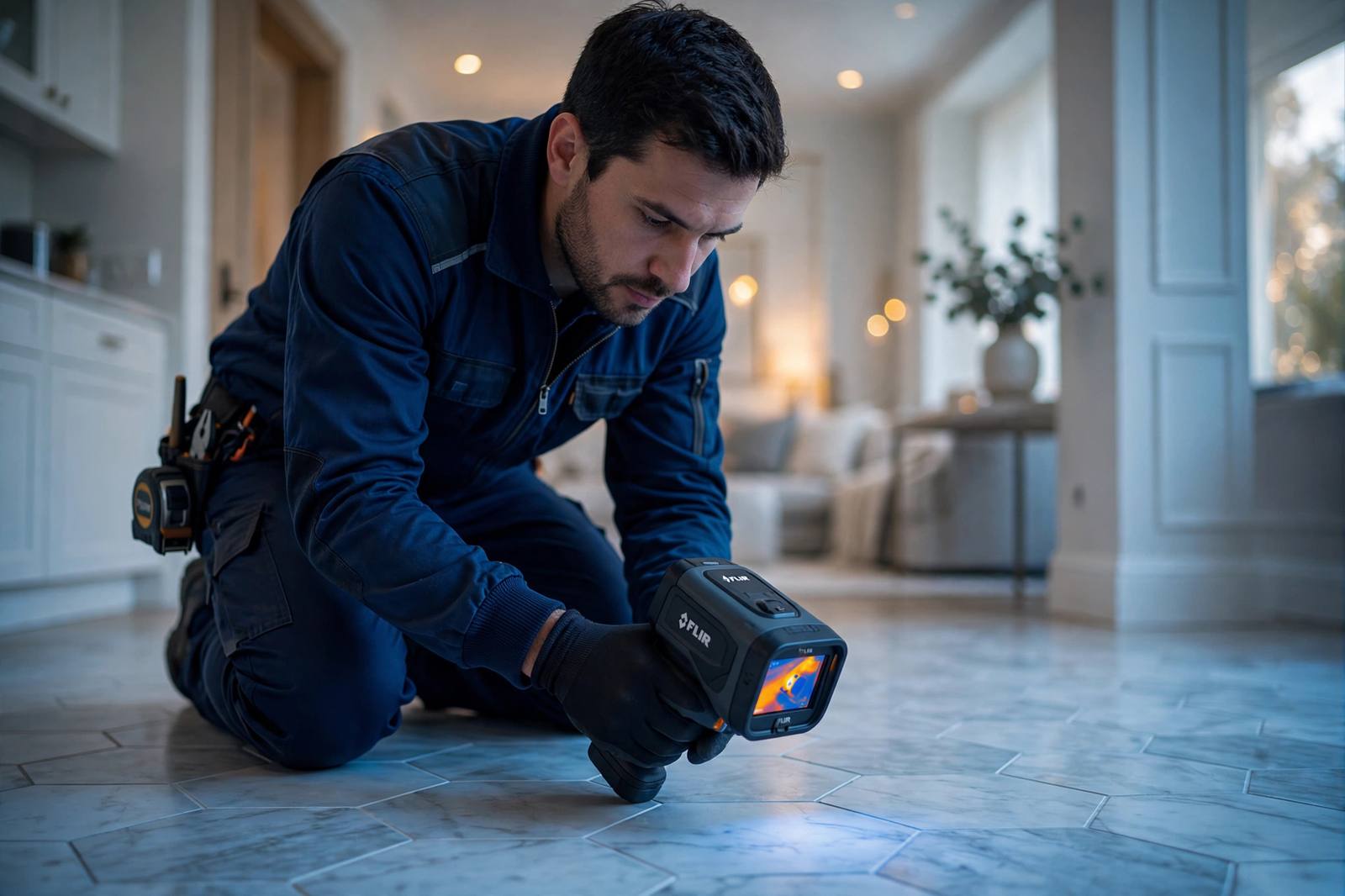
Because many Frisco homes are young enough for builder warranties to matter, documentation is the theme of our detection process. The visit starts at the water meter with the whole house shut down. A moving dial confirms a pressurized leak, and isolating the water heater reveals hot-side versus cold-side, halving the search immediately. Acoustic listening follows with sensitive ground microphones that detect the high-frequency hiss of escaping water through slab and tile. Thermal imaging cameras then scan floors for heat blooms from hot-line failures, fast and visual. For faint signals or the post-tension slabs common in 2000s Frisco construction, tracer gas pinpoints within inches: the line is drained, charged with a safe hydrogen-nitrogen blend, and a sniffer finds the exact escape point. Segment pressure tests confirm the diagnosis. The visit takes one to two hours and produces a written report with the marked location, thermal images, and a flat repair quote. Keep that report. If your home is within its builder warranty window, Texas residential warranties can cover plumbing defects, and a professional pinpoint report is the evidence that moves a claim. Even outside warranty, the documentation supports insurance claims and becomes part of the home's service history for future resale in Frisco's competitive market.
Slab Leak Signs in Frisco's Newer Homes
Frisco's warning signs mirror the metroplex, with the twist that they often appear in surprisingly young homes. A water bill that jumps without explanation is the earliest flag; do not dismiss it because the house is only twelve years old. Warm spots on tile or wood floors indicate hot-line failures, common where long runs feed distant primary suites in large Frisco floor plans. Hissing in quiet hours, tile cracking or tenting, laminate buckling, and damp carpet along baseboards all warrant prompt checks. A water heater cycling beyond your usage is heating water that is escaping. Musty odors signal moisture wicking into walls. In Frisco, pay special attention to symptoms clustered near areas of known construction stress: additions, outdoor kitchen tie-ins, and pool equipment plumbing, where later modifications meet original rough-in. Also watch foundation companions, because the expansive clay here moves dramatically: doors sticking after dry spells and hairline brick cracks that widen can share a root cause with slab leaks. An unusually green lawn strip through the dry months can mark a supply leak feeding it from below. When the bill spikes and any physical sign appears, same-day detection is the economical move regardless of the home's age.
Repair Options for Frisco Homes
Frisco homeowners choose among four repair strategies, and the home's age shapes the recommendation. Spot repair opens the slab at the pinpointed defect, replaces the failed section, and patches the concrete. It is the right answer for a single installation defect, like one kinked PEX run, in an otherwise young, healthy system. Tunneling repairs from below without touching floors: technicians hand-dig beneath the foundation from outside. In Starwood, Stonebriar, and Phillips Creek Ranch homes with premium tile and hardwood, tunneling frequently costs less in total than breaking and replacing expensive flooring. Rerouting abandons the defective under-slab line and runs new PEX through walls and attic, the smart move when multiple installation defects surface or early copper shows systemic issues. Whole-house repiping is rarely needed in Frisco's young stock, but for the earliest 2000s homes with failing copper throughout, it ends the cycle permanently. Our technicians present each viable option with pricing, lifespan, and disruption, and we document everything for warranty purposes. One Frisco-specific note: if a defect is clearly a construction flaw within the warranty window, we will tell you to pursue the builder first, because a free builder repair beats any paid one. All our work is permitted, pressure-tested, and warranted in writing.
Slab Leak Costs and Warranty Angles in Frisco
Frisco detection visits with professional equipment run $175 to $475, typically credited toward the repair. Spot repairs on a pinpointed defect generally cost $2,500 to $4,500 including breakout, pipe replacement, backfill, and slab patching. Tunneling ranges from $4,800 to $7,800 for the excavation labor, but preserves flooring often worth far more in Frisco's upgraded homes. A hot-line reroute through the attic usually lands between $2,800 and $5,800 given the long runs in larger floor plans. Whole-house repipes, uncommon but occasionally warranted in the earliest 2000s stock, run $8,000 to $16,000. Frisco cost drivers include post-tension slabs requiring pre-cut scanning, large footprints with long pipe runs, and premium finish restoration. Be skeptical of bids far below these bands; skipped permits and buried compression fittings are the usual shortcuts. Our quotes itemize labor, materials, permit fees, and restoration separately, and financing is available for larger projects. Before authorizing paid work on a younger home, check your builder warranty: a documented construction defect inside the warranty window can mean the builder pays, not you. We provide the pinpoint report and photos that make those claims stick, and we will advise honestly when the warranty path is better than our invoice.
First Steps for Frisco Homeowners
Verify the leak yourself first. Shut off every fixture, the ice maker, and the irrigation, then watch the water meter for fifteen minutes. A moving dial means pressurized water is escaping. Shut the water heater supply and recheck; if the meter stops, the failure is on the hot side. Photograph the meter, any damp spots, and damaged flooring, and pull out your builder warranty documents if the home is under ten years old. If water is actively surfacing, close the main valve to stop damage and billing. Then call for same-day detection. In Frisco's clay, delay lets leaking water erode soil support and tilt the slab, which can crack premium tile and stress more joints. Never approve jackhammering on a guess, especially with expensive floors and possible warranty coverage at stake. A proper detection visit takes about two hours and costs a few hundred dollars; a misplaced opening costs thousands and fixes nothing, and it can complicate a warranty claim. When our technician arrives, expect a confirmed location, thermal images, and a flat quote before concrete work is discussed. Most repairs schedule within days and finish in one to three days, with the full price approved by you before work begins.
Get a Pinpoint Diagnosis in Frisco
No jackhammer guesswork. Thermal imaging + acoustic equipment finds your leak within inches.
☎ Call (877) 762-1902Frisco Slab Leak FAQs
How much does slab leak detection cost in Frisco?
Frisco detection visits run $175 to $475 with acoustic, thermal, and tracer gas equipment. The appointment takes one to two hours and includes a marked leak location, thermal images, and a flat repair quote. The fee is credited toward the repair when you proceed with us.
Can new homes in Frisco get slab leaks?
Frisco's explosive growth from the 2000s onward means most homes are young, but fast tract construction produced kinked PEX, poorly bedded lines, and trench debris failures. The earliest 2000s subdivisions like Starwood and Stonebriar are now twenty-plus years old, and the first copper systems are entering early failure. Expansive Blackland clay underlies it all.
Does the builder warranty cover slab leaks in Frisco?
Texas's residential construction warranties sometimes cover plumbing defects within the warranty window, typically up to ten years for major systems. Check your builder warranty documents first, and get a pinpointed diagnosis with documentation to support any claim.
Will homeowners insurance cover a slab leak in Frisco?
Texas policies generally cover resulting damage like ruined flooring but exclude the pipe repair as wear and tear. Photograph everything early, because sudden documented failures get far better claim treatment.
How long does slab leak repair take in Frisco?
A spot repair is usually done in one day. Tunneling takes two to three days, and reroutes or repipes run two to five days. Frisco permit inspections are coordinated as part of the project schedule.
Do you warranty slab leak work in Frisco?
Yes. Every repair includes a written workmanship warranty, with extended coverage on tunneling, reroutes, and repipes. All work is permitted, pressure-tested, and documented with photos.
Nearby Cities
Keep Learning
Slab Leak: Tunneling vs Rerouting — Which Is Better?
Tunneling vs rerouting for slab leaks: real costs ($4k-$8k vs $2.5k-$6k), timelines, disruption, and when each method wins. Honest…
Slab Leak vs Foundation Leak: How to Tell the Difference
Slab leak vs foundation leak: symptom-by-symptom comparison, free diagnostic tests, and cost differences. Tell them apart before c…
Water Line vs Sewer Line Slab Leak: How to Tell
Is your slab leak on the water supply line or the sewer drain? Learn the symptoms, DIY meter tests, pro diagnostics, and repair co…