Slab Leak Detection & Repair in Lubbock, TX
Lubbock's High Plains setting gives slab leaks a different character than the rest of Texas. Instead of gumbo clay heave, the forces here are caliche soils, hard freezes, and some of the hardest water in the state working on mid-century copper. The neighborhoods around Texas Tech, Tech Terrace, South Overton, and the 1980s tracts of southwest Lubbock hold thousands of homes built from the 1950s through the 1980s, and their original plumbing is now sixty to seventy years old in the oldest stock. Winter adds a threat most of Texas never faces: hard freezes that burst exterior lines and hammer the whole system with pressure spikes. Our technicians provide same-day slab leak detection throughout Lubbock using acoustic listening, thermal imaging, and tracer gas, pinpointing failures within inches before any concrete is disturbed. Every visit ends with a marked location, photo documentation, and flat-rate repair options. A spiking water bill after a freeze, a warm spot on the floor, or the sound of running water in a quiet house all deserve prompt attention on the South Plains.
Neighborhoods We Serve in Lubbock
Tech Terrace, South Overton, Lakeridge, Melonie Park, Rush, West End, Monterey, Clapp Park, Quaker Heights, Southwest Lubbock — and every ZIP code in between.
Why Lubbock Homes Get Slab Leaks
Lubbock sits on the High Plains over caliche, a cemented calcium-carbonate hardpan that does not swell like clay but creates sharp, uneven trench beds that abrade pipe over decades. Wind-deposited surface soils shift with storms, and the region's hard freezes cycle the ground through freeze-thaw stress that inland Texas never sees. Combined with very hard Ogallala water pitting copper from the inside, the underground environment attacks pipe both mechanically and chemically.
Caliche, Freezes, and Hard Water: Lubbock's Triple Threat
Lubbock's slab leak drivers read like a High Plains field guide, distinct from the clay-heave story told in Dallas or Houston. First is caliche, the calcium-carbonate hardpan underlying much of the South Plains. Caliche does not swell like Blackland clay, but it is rock-hard and unforgiving; trenches cut through it often left pipe resting on sharp, uneven surfaces, and decades of even minor soil vibration abrade pipe walls at those contact points. Second is the freeze. Lubbock sees genuine hard freezes most winters, and each one threatens exterior hose bibs, irrigation backflows, and any poorly insulated line. When those burst, the sudden pressure transient hammers through the whole system, and the weakest buried joint or thinnest pitted section is where it lets go. Third is water chemistry. Lubbock's Ogallala-derived supply is very hard, and sixty years of it flowing through mid-century copper means pitting corrosion is advanced in the oldest homes. The housing stock concentrates all three forces: 1950s through 1970s homes around the university and in South Overton, and 1980s tracts in the southwest, many still on original plumbing. Some 1980s and early 1990s homes also carry polybutylene, a material with its own well-documented failure history. For Lubbock homeowners, the practical read is that age, freeze exposure, and water chemistry matter more here than soil heave, and winter is when the phone rings most.
How We Detect Slab Leaks on the South Plains
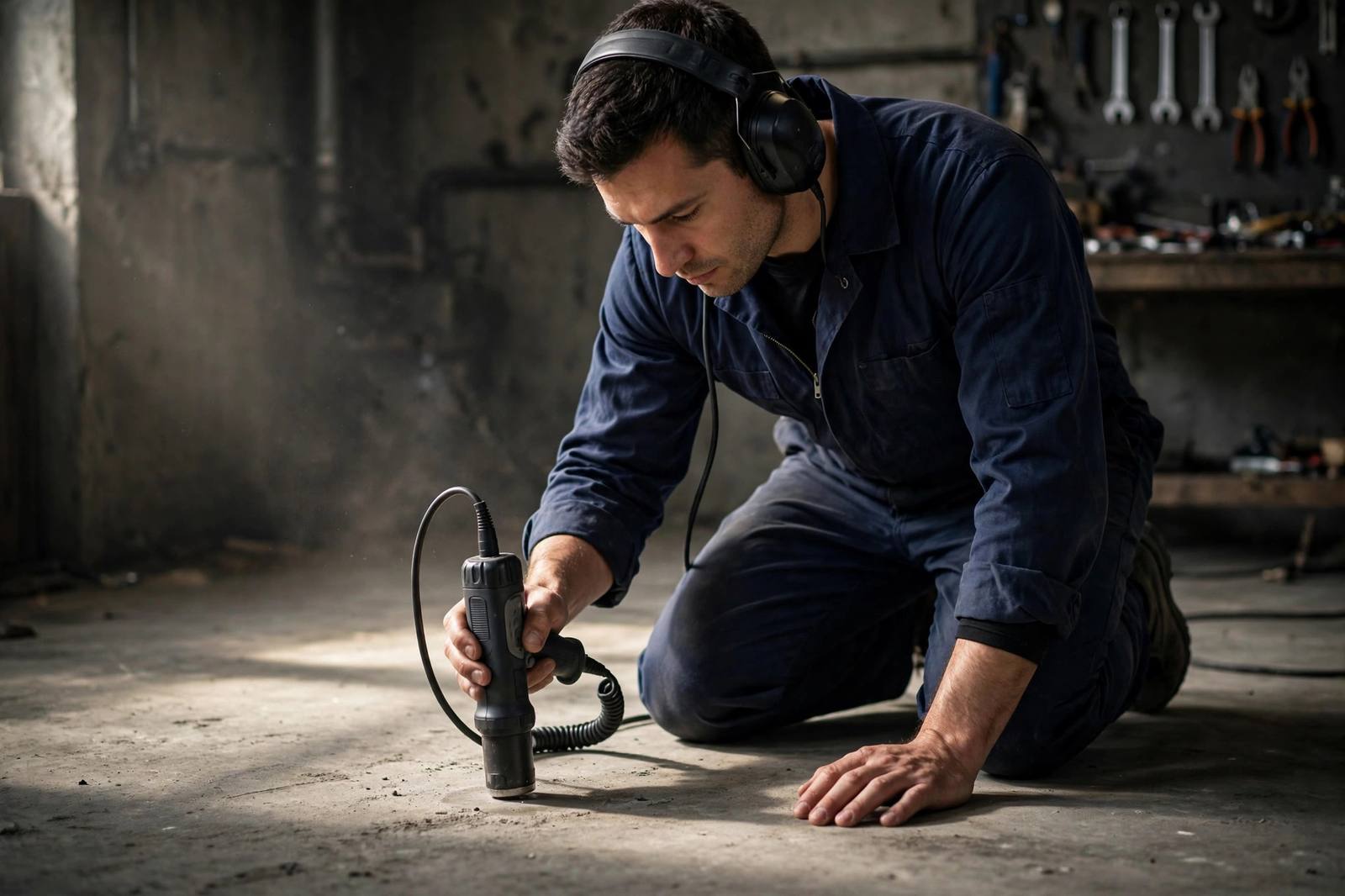
Our Lubbock detection process accounts for High Plains conditions. The visit starts at the water meter with the whole house shut down. A moving dial confirms a pressurized leak, and isolating the water heater reveals whether it is hot-side or cold-side, halving the search immediately. Acoustic listening follows with sensitive ground microphones. In caliche country, sound transmission differs from clay soils, and our technicians are experienced with the local signature. Thermal imaging cameras then scan floors for heat blooms from hot-line failures, highly effective on the tile and concrete floors common in West Texas homes. For faint signals, tracer gas pinpoints within inches: the suspect line is drained, charged with a safe hydrogen-nitrogen blend, and a sniffer finds the exact escape point. Segment pressure tests confirm the diagnosis before any repair discussion. The visit takes one to two hours and produces a written report with the marked location, thermal images, and a flat repair quote. That documentation matters for insurance claims, which in Lubbock often involve freeze-related damage questions, and for resale disclosures. No concrete work is discussed until the location is proven, because a misplaced opening in a home with stained concrete or Saltillo tile is an expensive mistake.
Slab Leak Signs in Lubbock Homes
Lubbock homes show the standard warning signs plus a freeze-season pattern worth knowing. A water bill that jumps without explanation is the earliest flag; compare against the same month last year to filter seasonal irrigation. Warm spots on tile or concrete floors indicate hot-line failures. Hissing or running water in a quiet house, especially at night, warrants a same-day call. Cracked tile, buckling laminate, and damp carpet along baseboards all deserve prompt attention. A water heater cycling beyond normal use is heating water that is leaking away. Musty odors signal moisture wicking into wall cavities. The Lubbock-specific watch comes after hard freezes: if the bill spikes in the weeks following a deep freeze, suspect a burst exterior line or a pressure-spike failure at a weakened buried joint. Also watch for polybutylene-era homes from the 1980s and early 1990s; that gray plastic pipe fails at fittings with little warning, and a slab leak in a polybutylene system usually argues for repiping rather than spot repair. Outdoors, a green strip of lawn persisting through dry months can mark a supply leak. When the bill spikes and any physical sign appears, same-day detection beats another billing cycle, because High Plains water is expensive and leaking dollars add up fast.
Repair Options for Lubbock Homes
Lubbock homeowners choose among four repair strategies. Spot repair opens the slab at the pinpointed location, replaces the failed section, and patches the concrete. At $2,000 to $4,000 all-in, it is the economical answer for a single isolated failure in an otherwise healthy system. Tunneling repairs from below without touching floors: technicians hand-dig beneath the foundation from outside. It costs more in labor but preserves tile, stained concrete, and Saltillo that define many West Texas homes. Rerouting abandons the failing under-slab line and runs new PEX through walls and attic, the right call when failures repeat. Whole-house repiping replaces every supply line and is the definitive answer for mid-century homes with advanced corrosion or 1980s homes with polybutylene; at $6,500 to $13,000 it ends the failure cycle permanently. Our technicians are candid about polybutylene: patching it is postponing the inevitable, and we will tell you so. Every job is permitted through the City of Lubbock, pressure-tested, and warranted in writing, with restoration coordinated under one roof. For freeze-prone homes, we also recommend exterior plumbing insulation and frost-proof hose bibs as part of the project, cheap protection against the next hard freeze.
Slab Leak Costs in Lubbock
Lubbock detection visits with professional equipment run $150 to $425, typically credited toward the repair. Spot repairs on a pinpointed leak generally cost $2,000 to $4,000 including breakout, pipe replacement, backfill, and slab patching. Tunneling ranges from $4,000 to $6,500 for the excavation labor, but preserves flooring often worth far more. A hot-line reroute through the attic usually lands between $2,500 and $5,000. Whole-house repipes run $6,500 to $13,000. Lubbock cost drivers include caliche excavation difficulty, which can slow tunneling, post-tension slabs in newer builds needing pre-cut scanning, and older homes where asbestos testing is prudent. Bids far below these bands are a red flag: skipped permits, untested joints, and compression fittings buried in concrete are the usual shortcuts. Our quotes itemize labor, materials, permit fees, and restoration separately for honest comparison, and financing is available for repipes and larger projects. One budget note for West Texas: water rates make even small leaks expensive over time, so the payback on a proper repair is faster here than homeowners expect. A leak wasting a few thousand gallons a month pays for its own detection visit many times over.
What to Do When You Suspect a Slab Leak in Lubbock
Verify the leak yourself first. Shut off every fixture, the ice maker, and the irrigation, then watch the water meter for fifteen minutes. A moving dial means pressurized water is escaping. Shut the water heater supply and recheck; if the meter stops, the failure is on the hot side. Photograph the meter and any damp spots or cracked tile, because documentation strengthens insurance claims, particularly freeze-related ones. If water is actively surfacing, close the main valve to stop damage and billing. Then call for same-day detection rather than waiting. After a hard freeze, do not wait at all: freeze-related failures can escalate quickly as thawed ground shifts. Never approve jackhammering on a guess. A proper detection visit takes about two hours and costs a few hundred dollars; a misplaced opening costs thousands and fixes nothing. When our technician arrives, expect a confirmed location, thermal images, and a flat quote before concrete work is discussed. Most repairs schedule within days and finish in one to three days, with the full price approved by you before work begins. And before next winter, ask about insulating exterior plumbing; it is the cheapest slab leak prevention Lubbock offers.
Get a Pinpoint Diagnosis in Lubbock
No jackhammer guesswork. Thermal imaging + acoustic equipment finds your leak within inches.
☎ Call (877) 762-1902Lubbock Slab Leak FAQs
How much does slab leak detection cost in Lubbock?
Lubbock detection visits run $150 to $425 with acoustic and thermal equipment. The appointment takes one to two hours and includes a marked leak location, thermal images, and a flat repair quote. The fee is credited toward the repair when you proceed with us.
Which Lubbock neighborhoods have the most slab leaks?
The 1950s through 1970s neighborhoods around Texas Tech, including Tech Terrace and South Overton, see the most failures, along with 1980s tracts in southwest Lubbock. These homes combine original copper or early polybutylene with caliche soils and decades of freeze cycles.
Do Lubbock freezes cause slab leaks?
Yes, and in Lubbock it matters more than in most Texas cities. Hard freezes burst exterior plumbing and send pressure spikes through the system, and freeze-thaw cycling in the soil stresses buried joints. Insulating hose bibs and exterior lines each fall is cheap insurance.
Does homeowners insurance cover slab leaks in Lubbock?
Texas policies generally cover resulting damage like ruined flooring but exclude the pipe repair as wear and tear. Document symptoms with photos and dates, because sudden failures with clear timelines get far better claim treatment.
How long does slab leak repair take in Lubbock?
A spot repair is usually done in one day. Tunneling takes two to three days, and reroutes or repipes run two to five days. Lubbock permit inspections are coordinated as part of the project.
Do you warranty slab leak work in Lubbock?
Yes. Every repair includes a written workmanship warranty, with extended coverage on tunneling, reroutes, and repipes. Work is permitted, pressure-tested, and photographed for your records.
Nearby Cities
Slab leak pros nearbyAustin
Slab leak pros nearbyCorpus Christi
Slab leak pros nearbyDallas
Slab leak pros nearbyEl Paso
Slab leak pros nearbyFort Worth
Slab leak pros nearby
Keep Learning
Water Line vs Sewer Line Slab Leak: How to Tell
Is your slab leak on the water supply line or the sewer drain? Learn the symptoms, DIY meter tests, pro diagnostics, and repair co…
What Causes Slab Leaks? 7 Reasons Pipes Fail Under Concrete
What causes slab leaks? Corrosion, shifting soil, abrasion, high pressure & more. The 7 real reasons pipes fail under concrete — a…
Can a Slab Leak Cause Mold? Health Risks Explained
Can a slab leak cause mold? Yes — often hidden. Learn the EPA 24-48 hour growth window, health risks, warning signs, and the right…