Why Is My Water Bill So High? The Slab Leak Check
If your water bill suddenly jumped and your household routine didn't change, a hidden leak is the most likely cause — and a slab leak is the version of that leak you least want to ignore. The EPA estimates household leaks waste more than 9,300 gallons a year on average, and a single pressurized under-slab leak can blow past that in a month. Here's how to verify the spike is real, run the free checks that separate a slab leak from cheaper causes, and decide what to do next.
📚 This guide is part of our Signs & Symptoms hub — every guide on this topic in one place.
How Big a Spike Points to a Leak?
Start with the math, because bills jump for innocent reasons too. Compare this bill to the same month last year, not just to last month — irrigation season, guests, and a filled pool all raise usage legitimately. A leak pattern looks different: usage up 30–50% or more with no explanation, and — the real tell — it stays up the following month instead of settling back down.
Also check the bill itself for a 'continuous usage' or leak alert; many utilities now flag accounts where water runs 24 hours a day, which almost never happens in a leak-free home. And read your own meter against the bill once: utilities occasionally misread, and a five-minute meter check eliminates that possibility before you worry about your foundation.
If the spike is real and sustained, something in your home is using water around the clock. The question is only where — and the checks below answer that in order of how cheap each cause is to fix.
The Usual Suspects, Cheapest First
Irrigation systems are the most common innocent culprit: a stuck zone valve or a cracked sprinkler line can run for hours daily. Walk the yard while the system runs and look for soggy spots, and check the controller for accidental schedule changes — a power outage can reset timers to defaults that water far more often.
Toilets come next. A worn flapper or a fill valve that never quite seals refills the tank silently all day — hundreds of gallons, zero evidence. The dye test settles it in 15 minutes: food coloring in the tank, no flushing, and color in the bowl means the flapper is passing.
Then the quiet appliances: a water softener stuck in regeneration can dump enormous volumes down the drain, and a water heater's pressure-relief valve can weep steadily into its drain line. Check both. If all of these come back clean and the bill stays high, the water is going somewhere structural — into a wall, a crawlspace, or under the slab.
The 30-Minute Test That Confirms a Leak
The water meter test is the dividing line between 'my bill is weird' and 'my house is leaking.' With every fixture and appliance off — irrigation included — a healthy home's meter sits perfectly still. If the leak indicator creeps or the reading climbs over 30 minutes, water is escaping somewhere between the meter and your fixtures.
Our step-by-step meter test guide walks you through it, including the results table that separates supply-line leaks from toilet leaks and drain-side leaks. It costs nothing, needs no tools beyond a phone camera for timestamps, and the photos you take double as documentation if this becomes an insurance claim later.
A confirmed moving meter plus a clean toilet check means the leak is in a pipe — and at that point the symptoms in the next section tell you how likely it is to be under the slab specifically.
Slab Leak Clues That Ride Along With a High Bill
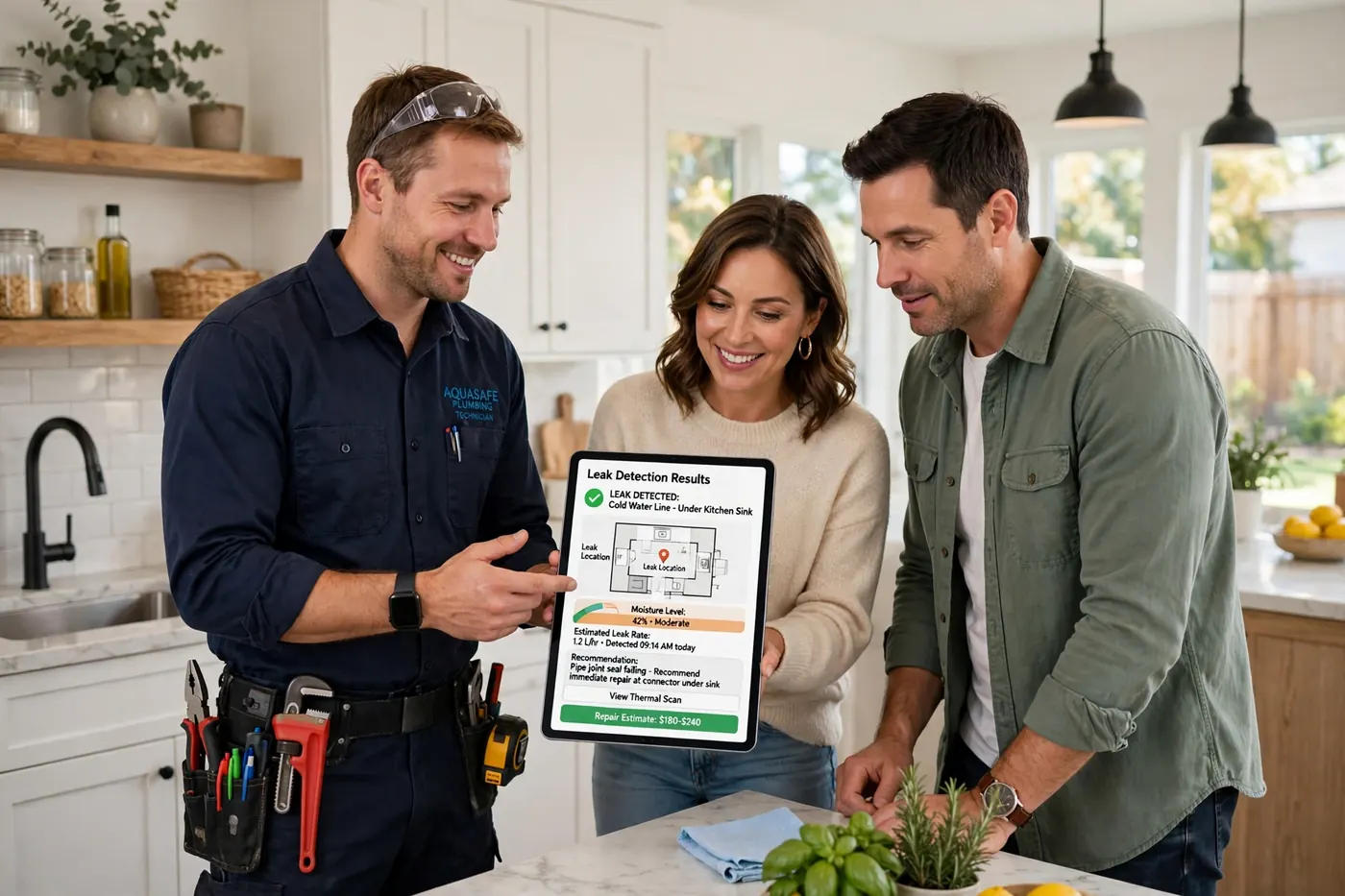
A high bill says 'leak.' These companions say 'slab leak.' A warm or hot patch on tile, vinyl, or wood flooring means a hot-water line is leaking right beneath that spot — homeowners often find it barefoot in the morning. The faint sound of running water or hissing when the house is quiet and everything is off means pressurized water escaping somewhere enclosed.
Watch the water heater too: if it's firing far more often than it used to, it may be reheating water that a hot-side leak keeps draining away. Add damp carpet, flooring that feels soft or warped, a musty smell that cleaning doesn't fix, or water pressure that's slowly sagging, and the case gets strong.
Any one clue can have another explanation. A sustained bill spike plus a moving meter plus any one of these is a pattern no homeowner should sit on — every week it runs, it's wasting water and wetting the soil your foundation sits on.
How Much Water (and Money) a Slab Leak Wastes
The numbers explain why utilities flag these accounts. Even a pinhole in a pressurized line leaks around the clock — not just when you use water — which is how the EPA's average of 9,300+ wasted gallons a year for leaky homes gets reached so fast, and why roughly 9% of homes leak 50 gallons or more every single day. A larger crack or a separated fitting wastes far more.
Translate that into bill terms and a mid-size slab leak commonly adds $50–$250 a month (your rate and the leak size decide) — money literally soaking into the ground. But the water bill is the smallest cost on the table. The same water is saturating soil under your slab, which is how leaks turn into flooring replacement, mold remediation, and in the worst cases foundation movement. The bill is best read as an alarm, not the damage itself.
This is also why 'let's watch it for a few months' is expensive advice. A leak never heals, pressure and corrosion only widen it, and the waste compounds. The cheap moment to act is the first unexplained bill, not the third.
What to Do This Week
Day one: run the meter test and the toilet dye test, and photograph the meter. That sorts leak from no-leak and rules out the cheapest fix. If the meter moves and the toilets are clean, book a pinpoint detection visit — typically $150–$600, and it locates the leak within inches so any repair opens the smallest possible area.
While you wait for the appointment, protect the claim you'll probably file: keep the high bills, save your meter photos with dates, and photograph any floor or wall changes. Insurers typically cover the resulting water damage from a sudden leak — and that documentation is what proves 'sudden.'
If the meter is spinning fast rather than creeping, don't wait for an appointment window: shut the main valve and call the same day. A fast-moving meter means volume, and volume under a slab is an emergency, not a curiosity. And if your tests all come back clean but the bill stays high for a second month, get the detection visit anyway — intermittent and drain-side leaks can hide from a single afternoon of testing.
Could It Be a Rate Increase or a Longer Billing Cycle?
Two boring explanations deserve thirty seconds each before you blame a pipe. First, rates: utilities raise water rates regularly, and a tier change can sting — if your usage crossed into a higher pricing tier, the bill can jump 30% while your gallons barely move. Compare the usage figure (gallons or CCF), not the dollar total, against last year's same month. Dollars up but gallons flat is a pricing story, not a leak.
Second, the cycle: billing periods vary from about 26 to 35 days. A long cycle inflates one bill and shrinks the next. Check the read dates printed on the statement; if this cycle ran five days longer than usual, some of your 'spike' is just calendar.
Estimated reads are the third quiet culprit — when a meter reader can't access the meter, the utility estimates, and the next actual read 'trues up' months of underestimates into one alarming bill. Your statement usually marks estimated reads with an 'E.' If this bill is the catch-up, the gallons still went somewhere eventually — but spread over months, which changes the urgency completely.
Rule the paperwork out with the usage comparison, then let the meter test arbitrate the rest.
Talk to a Slab Leak Pro
Reading is good. A pinpoint diagnosis is better — thermal imaging and acoustic equipment find your leak within inches.
☎ Call (877) 762-1902Frequently Asked Questions
How much can a slab leak raise my water bill?
Commonly $50–$250 a month depending on your local rate and the leak's size. A pinhole leaks 24/7, so even small leaks add up fast — the EPA puts average household leak waste at 9,300+ gallons a year.
My bill doubled but I see no water anywhere. Is that normal for a slab leak?
Yes — it's the classic presentation. Water escapes into the soil under the slab and may never surface inside the home. The bill and the meter are often the only early evidence.
Could a high bill be the utility's mistake?
Occasionally. Photograph your meter and compare it to the billed reading. If they match and usage is genuinely up, the water went somewhere in your home.
What's the fastest free way to check for a leak?
The water meter test: everything off for 30 minutes, then check whether the meter moved. Pair it with a toilet dye test and you've covered the two biggest causes in under an hour.
Should I call the water company first?
It's worth one call — some utilities do a free meter check and many offer a one-time leak adjustment on your bill after a repair. But they won't find or fix a leak inside your home; that's a detection specialist's job.
How fast do I need to act on an unexplained spike?
Within days, not months. Every week an under-slab leak runs, it wastes water and saturates the soil under your foundation. The first unexplained bill is the cheapest moment to act.
My bill spiked in summer. Isn't that just irrigation?
It can be — summer is when irrigation legitimately doubles some bills. The separator is the meter test with the irrigation system shut off entirely: if the meter sits still, the water is going where you sent it. If it still moves, summer is innocent and a pipe is not.
Related Guides
7 Signs of a Slab Leak Every Homeowner Should Know
Spot a slab leak before it destroys your foundation. The 7 warning signs — high water bills, hot spots, cracks — plus what to do n…
Water Meter Test for a Slab Leak: Step-by-Step Guide + Results Table
The water meter test confirms a hidden leak in about 30 minutes with no tools. Full steps, how to read the leak indicator, and a r…
Slab Leak or Running Toilet? The 15-Minute Dye Test That Tells
A running toilet and a slab leak both spike your water bill and move your meter. The 15-minute dye test separates them — before yo…