Slab Leak Detection & Repair in North Las Vegas, NV
North Las Vegas grew faster than almost any city in America — and much of its plumbing went in during the frantic 2000s construction boom, when speed sometimes beat craftsmanship. Today those homes are hitting the age where installation shortcuts, hard water, and corrosive desert soil start producing slab leaks. Our same-day pros provide slab leak detection and repair across North Las Vegas, Nevada, from the master-planned streets of Aliante to the older blocks near Craig Ranch. We pinpoint hidden leaks with acoustic listening, thermal imaging, and tracer-gas testing — mapping the failure within inches so repair means one surgical opening, not a torn-up floor. A warm patch of tile, a water bill that jumped for no reason, or the faint sound of running water under a quiet house all deserve same-day attention: every hour a pressurized line leaks, it erodes the soil supporting your slab. We confirm the diagnosis in one visit and hand you a written estimate with every option priced honestly. Call today for same-day slab leak detection in North Las Vegas.
Neighborhoods We Serve in North Las Vegas
Aliante, Eldorado, Craig Ranch, Seastrand, Tropical, Tule Springs, Los Prados — and every ZIP code in between.
Why North Las Vegas Homes Get Slab Leaks
North Las Vegas sits on the valley's caliche-capped, alkaline desert soil — corrosive to copper from the outside while very hard municipal water attacks it from within. Slab-on-grade construction is universal across the city's master-planned communities, and summer soil-temperature swings under sun-baked concrete have been flexing every buried joint since the 2000s building boom. The result is a dual failure pattern: installation-defect leaks in boom-era homes and classic age-related pinholes in the city's older neighborhoods.
Signs of a Slab Leak in North Las Vegas Homes
In North Las Vegas, slab leaks announce themselves the same way they do across the valley — but the city's young housing stock means homeowners often dismiss the signs as impossible in a 'newer' home. Don't. The most common first symptom is a warm or hot spot on tile or laminate flooring, usually a hot-water line leaking underneath; in Aliante and Eldorado homes with open floor plans, that warm patch can sit far from any visible plumbing. Your water bill is the most honest witness: a sharp, unexplained jump with no change in usage means water is going somewhere, and a pressurized line under the slab is the leading suspect. In a quiet house with everything off, press your ear to the floor — a hiss or faint running-water sound means a line is breached below. Watch for water pressure dropping at fixtures, carpet edges that feel damp or smell musty, grout lines that darken, tile that sounds hollow when tapped, and baseboards separating from walls as moisture wicks up. Outside, note any landscaping that stays lush right against the foundation while the rest of the yard follows the irrigation schedule, or soil that never fully dries. In the older Craig Ranch area, where homes run decades older than the Aliante builds, also watch for the age-related signs: recurring pinholes, discolored water after the tap sits overnight, and warm spots that migrate as one failing section gives way to the next. Two or more signs together mean it's time for professional detection — waiting only expands the repair from pipe to flooring to foundation.
How We Detect Slab Leaks in North Las Vegas
The fastest way to turn a slab leak into a disaster is to start breaking concrete before you know exactly where the failure is. Our North Las Vegas detection visits begin with meter and pressure testing to confirm the leak and identify the failing system — hot-water line, cold-water line, or drain — because each requires a different detection approach. Then we bring out electronic acoustic equipment: water escaping a pinhole under pressure makes a distinct high-frequency signature, and our sensors trace it through the slab to the loudest point, mapping the buried line's path along the way. Thermal imaging provides the visual cross-check — an infrared camera renders the heat plume from a hot-water leak in real time, frequently narrowing the location to a patch the size of a dinner plate. For cold-water lines that don't show thermally, or for very small breaches, we isolate the suspect line, introduce a safe tracer gas, and sweep the slab with a sniffer that detects gas molecules escaping through the concrete precisely at the failure. Moisture meters and compact inspection cameras then map how far saturation has spread, which shapes the repair plan and provides the documentation insurers want to see. North Las Vegas's dense caliche transmits sound differently than softer soils, so our technicians calibrate their acoustic gear for local ground conditions rather than running generic settings. The full visit takes 60 to 90 minutes. You get the marked leak location, photos of the findings, and a written estimate covering every repair option — the precision that makes the actual fix surgical instead of destructive.
Slab Leak Repair Options in North Las Vegas
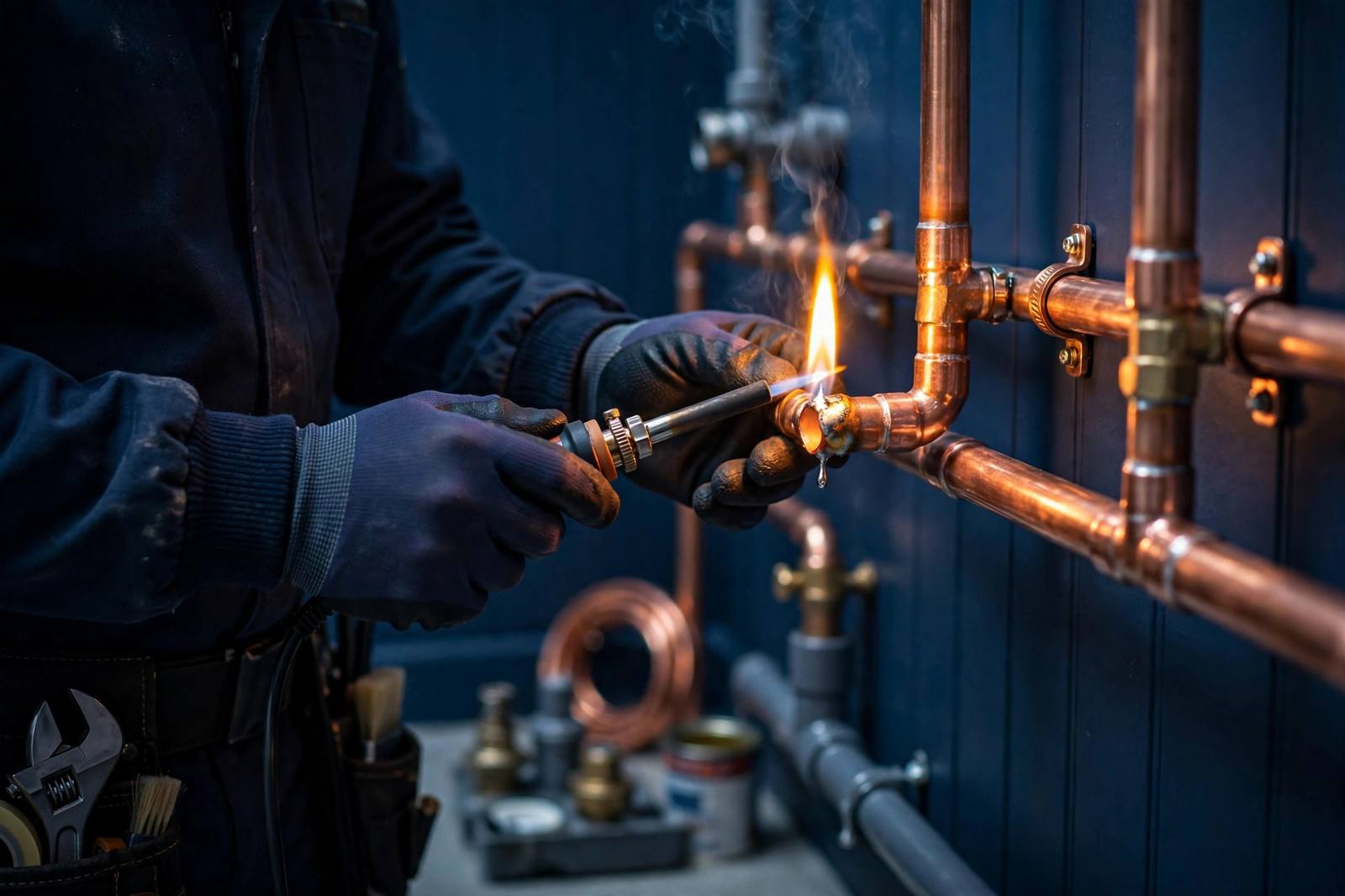
Once the leak is mapped to within inches, North Las Vegas homeowners generally choose among three repair options, and the city's 2000s-era plumbing makes the decision interesting. The direct spot repair is the fastest: we open the slab at the marked location, cut out the failed section, and splice in new pipe — usually completed in a single day. For an isolated failure in an otherwise healthy 2000s copper system, this is often the right and most economical answer. Tunneling is the second path: instead of breaking your finished floor from above, we dig a narrow tunnel beneath the slab from outside the foundation and repair the line from below. It costs more in labor, but tile, laminate, and carpet survive untouched — in homes with upgraded flooring, tunneling frequently yields the lowest total project cost once floor restoration is factored in. The third option is a whole-home reroute, and it deserves serious consideration here for a specific reason: some North Las Vegas tracts from the boom years have systemic installation issues — poorly supported runs, kinked lines, aggressive flux joints — that produce failures in clusters rather than in isolation. When detection reveals a second weak joint or widespread corrosion, abandoning the under-slab copper entirely and running new PEX overhead through the attic ends the cycle permanently. PEX is immune to the hard-water and soil corrosion attacking copper in the valley, and it flexes with thermal expansion instead of fatiguing. We'll show you exactly what we found and price all three paths, so the choice reflects your home's actual condition.
Why North Las Vegas Homes Get Slab Leaks
North Las Vegas is a tale of two plumbing eras. The headline story is the 2000s construction boom: Aliante, Eldorado, and the master-planned expanses along the northern valley went up at a breathtaking pace, and when thousands of homes are plumbed on tight schedules, quality control suffers. We routinely find the fingerprints of rush-era work in these homes — copper runs with inadequate strapping that flex and fatigue, joints with excess flux that corrode prematurely, and lines buried without proper sleeving where they pass through the slab. Twenty to twenty-five years later, those shortcuts are maturing into failures. The chemistry hasn't helped: North Las Vegas water is very hard, pitting copper from the inside, while the valley's alkaline caliche soil corrodes it from the outside — the same two-front attack driving pinhole leaks across the region. Summer heat adds mechanical stress as soil temperatures under sun-baked slabs swing between day and night, working every buried joint for decades. Meanwhile the older pockets of the city — the Craig Ranch area and the original townsite blocks — carry 1960s through 1980s copper now 40 to 60 years old and failing on the classic age curve. And across it all, slab-on-grade construction is essentially universal, so there's no crawlspace to catch an early drip; the first symptom is damage to the finished floor or a shocking water bill. The practical upshot: North Las Vegas leaks skew toward installation-defect failures in 'young' homes and age failures in older ones — which is why a full system evaluation during detection matters more here than in most markets.
What Slab Leak Detection & Repair Costs in North Las Vegas
Professional slab leak detection in North Las Vegas runs $175 to $450 for the full diagnostic visit — pressure testing, acoustic location, thermal imaging, a marked leak location, and a written repair estimate. That precision is the highest-value spending in the project because it eliminates exploratory demolition entirely. A direct spot repair at one pinpointed location typically costs $2,200 to $6,500, depending on pipe depth, whether it's a hot or cold line, and the flooring involved. Tunneling under the slab from outside carries higher labor costs but protects finished floors — often the economical total in homes with tile or upgraded surfaces. A whole-home reroute, replacing problem under-slab copper with new overhead PEX, generally falls between $4,000 and $10,000+ for a typical single-story, scaling with square footage and fixture count; in boom-era tracts with systemic installation issues, it's frequently the lowest total cost of ownership. The variable that matters most is time: a leak caught in its first weeks is a plumbing repair, while the same leak six months later is a plumbing repair plus flooring, baseboards, drywall, and mold remediation — easily doubling or tripling the bill. On insurance, most Nevada policies exclude the pipe fix itself as wear and tear but cover resulting damage: the slab access, destroyed flooring, and water damage. Keep the water bills showing the spike and our written detection report — adjusters ask for both, and having them ready accelerates your claim.
What to Do When You Suspect a Slab Leak
Start with the meter test — free, fast, and definitive. Turn off every faucet, toilet, appliance, and irrigation zone, then watch your water meter for 15 minutes. If the dial moves with everything off, water is escaping, and in a North Las Vegas home the slab is the prime suspect. If you hear an active rush of water or see pooling where it shouldn't be, shut off the main valve immediately; every hour of pressurized flow erodes the compacted soil under your slab, and foundation settlement is the repair that dwarfs all the others. Next, document: photograph any damp flooring, note warm spots by room, and pull together recent water bills showing the increase — this file becomes the backbone of any insurance claim. If you smell mustiness, run a dehumidifier near the affected area; the EPA's 24-to-48-hour mold window applies even in the desert, because the sealed cavity beneath a slab stays wet long after the surface dries. Resist hiring whoever can start jackhammering soonest — without electronic detection first, you're paying for holes in your foundation based on a guess. A qualified specialist pinpoints the leak with acoustic and thermal instruments before touching concrete, which is the entire difference between a surgical repair and a demolition project. Finally, schedule same-day professional detection. Our North Las Vegas technicians confirm the diagnosis, mark the exact location, and hand you a written estimate in one visit — replacing an escalating emergency with a clear plan and a fixed price.
Get a Pinpoint Diagnosis in North Las Vegas
No jackhammer guesswork. Thermal imaging + acoustic equipment finds your leak within inches.
☎ Call (877) 762-1902North Las Vegas Slab Leak FAQs
How much does slab leak detection cost in North Las Vegas?
A professional detection visit in North Las Vegas costs $175–$450 and includes pressure and meter testing, acoustic electronic listening, thermal imaging, a marked leak location, and a written repair estimate — completed in 60 to 90 minutes. Given how many local homes were built during the 2000s construction rush, that precision matters: it finds the exact failure without exploratory demolition.
Are 2000s-era homes in Aliante old enough for slab leaks?
They're middle-aged for copper. Most Aliante and Eldorado homes went up in the 2000s, putting their copper at 20–25 years old — young enough that failures are usually isolated, but old enough that rush-era installation issues are starting to surface. Have the full system pressure-tested during detection; if the rest of the lines hold strong, a spot repair is typically the right, economical call.
Does homeowners insurance cover slab leaks in North Las Vegas?
Often partially. Nevada policies typically exclude the failed pipe as wear and tear but cover resulting damage — breaking through the slab, replacing flooring, and repairing water damage. Sudden bursts are covered more readily than slow pinhole leaks. Keep your water bills and our written detection report; adjusters routinely ask for both.
How can I tell if I have a slab leak or just a high water bill?
Start with the meter test: shut off everything water-using and watch your meter for 15 minutes — movement means water is escaping. Then look for the classic signs: warm spots on tile, hissing through the floor in a quiet house, low water pressure, damp carpet edges, and a bill that jumped for no reason. Any two together warrant a professional detection visit, not a wait-and-see approach.
How long does slab leak repair take in North Las Vegas?
A direct spot repair is usually finished in one day. Tunneling takes one to two days. A whole-home reroute takes two to four days depending on home size. Detection itself is a same-day, 60–90 minute visit — so from first call to confirmed diagnosis and written estimate is typically under 24 hours.
Should I repair the leak or reroute my plumbing?
For the 2000s-era copper common in Aliante and Eldorado, an isolated failure usually calls for a spot repair or tunneling fix — the rest of the system often has plenty of life left. But if you've had two leaks, or an inspection shows widespread corrosion or multiple suspect joints, a reroute to PEX ends the cycle permanently and is worth pricing against repeated repairs.
Nearby Cities
Keep Learning
How Long Does Slab Leak Repair Take? Realistic Timelines
How long does slab leak repair take? Spot repairs: 1 day. Reroutes: 1-2 days. Tunneling: 2-4 days. Realistic timelines, costs, and…
How Plumbers Find Slab Leaks: 5 Detection Methods Explained
How do plumbers find slab leaks? Acoustic listening, thermal imaging, tracer gas, pressure tests and cameras explained — methods, …
Selling a House With a Slab Leak: Disclosure & Value
Selling a house with a slab leak? Learn disclosure rules, how leaks affect home value, repair-vs-as-is math, and the paperwork tha…