How Long Does Slab Leak Repair Take?
When a plumber tells you there's a leak under your concrete slab, the first question is usually about money — and the second is about time. How long will my house be torn up? Will I be without water? Can I stay home? The honest answer is that most slab leak repairs are faster than homeowners fear. A straightforward spot repair is often done in a single day. A reroute around the slab takes one to two days. Even tunneling under the foundation — the most involved common method — usually wraps up in two to four days. The outliers are full repipes and jobs tangled up in permits, drying, or floor restoration, which can stretch the disruption to a week or more. What actually drives the timeline isn't just the repair method. It's the detection phase, access to the leak, your local permit process, and how much finish work (tile, flooring, drywall) has to be put back together afterward. This guide breaks down realistic timelines for every common slab leak repair method, what happens on each day, and the five factors most likely to add days to your job.
- The Short Answer: Slab Leak Repair Timelines at a Glance
- Phase 1: Detection and Diagnosis Takes 2 to 4 Hours
- Spot Repair Through the Slab: Usually 1 Day
- Rerouting Around the Slab: 1 to 2 Days
- Tunneling Under the Slab: 2 to 4 Days
- Full Repipe: 2 to 5 Days for the Plumbing Work
- What Makes a Slab Leak Job Run Long
The Short Answer: Slab Leak Repair Timelines at a Glance
If you want the numbers up front, here they are. Slab leak detection and diagnosis takes 2 to 4 hours on site. A spot repair — breaking through the slab at one location and fixing a single leak — takes 1 day in most cases. Rerouting the leaking line up through walls and attic space takes 1 to 2 days. Tunneling under the slab to reach the leak takes 2 to 4 days. A whole-house repipe, which some homeowners choose instead of chasing individual leaks, takes 2 to 5 days for the plumbing work itself. Floor and finish restoration is the wildcard: patching concrete and relaying tile or flooring adds 1 to 5 days depending on materials, because thinset mortar and grout need cure time and custom tile may need ordering. So the full arc from the plumber's arrival to your house looking normal again typically runs 1 to 7 days. The plumbing fix is usually the fast part — it's the concrete, flooring, and drying that stretch the calendar. One more timeline that matters: how fast work can start. Reputable slab leak specialists often offer same-day or next-day detection visits, and emergency reroutes can begin within 24 to 48 hours of diagnosis. Permit-heavy jurisdictions are the main exception, where the city may add 3 to 10 business days before work can legally begin. Build a buffer into your planning. Even when the plumbing work is a single day, contractors in busy markets often book detection visits one to two weeks out during rainy seasons when slab leaks spike. Material lead times are rarely an issue for standard repairs, but if your job needs a specialty fitting or an engineered plan for a post-tension slab, add a week. The most realistic homeowner timeline is: one week to get on the schedule, one to four days of work, and three to five days of restoration.
Phase 1: Detection and Diagnosis Takes 2 to 4 Hours
Before any repair timeline starts, someone has to find the leak precisely — and this phase has its own clock. A proper slab leak detection visit takes 2 to 4 hours. The technician starts with a pressure test and a water meter check to confirm which line is losing water, then uses acoustic listening equipment to hear the leak's signature through the concrete, and often confirms with thermal imaging to map the warm plume of a hot-water leak or the cool signature of a cold-water leak. Pinpointing within a foot or two is the goal, because every extra foot of concrete broken is extra restoration time and money. Rushed or skipped detection is how one-day jobs become three-day jobs — a plumber who guesses at the location may break concrete in the wrong place. Expect to pay $150 to $600 for the detection visit itself, and don't let a contractor roll detection and repair into one vague quote without itemizing. Same-day detection is widely available from specialists, and the report you get — leak location, line type, pressure readings — becomes the basis for every timeline and price that follows. If your plumber wants to skip straight to breaking concrete, get a second opinion. Ask what the detection report includes before the technician arrives. A professional report documents the leak's location within a foot, identifies whether it's a hot or cold line, records static pressure readings, and notes pipe material and approximate age. This document is also your insurance evidence — carriers want proof of sudden failure, and a dated detection report with pressure readings is exactly that. Keep a copy even if you delay the repair; it establishes the timeline of discovery.
Spot Repair Through the Slab: Usually 1 Day
The spot repair is the fastest fix: break a hole in the slab directly above the leak, repair or replace that section of pipe, backfill, and patch the concrete. For a single accessible leak, the plumbing work takes 4 to 8 hours — genuinely a one-day job. The crew isolates the line, uses a jackhammer or concrete saw to open a roughly 3-by-3-foot access hole, exposes the pipe, cuts out the damaged section, and solders or presses in a replacement. Then the hole is backfilled with compacted fill and the concrete is re-poured. Here's where the day count gets honest: the concrete patch needs 24 to 48 hours to cure before flooring goes back on, and flooring restoration is usually a separate trade on a separate visit. So while the plumber is done in a day, your room may be out of commission for 3 to 5 days total. Spot repairs make the most sense for newer homes with a single isolated leak and otherwise healthy pipe — typically $1,500 to $4,000 all-in. They're a poor choice for older copper systems with systemic corrosion, where fixing one pinhole leak just buys time until the next one appears a few feet away. That's the most common reason a 'quick one-day fix' turns into repeat visits over two years. One critical check before any spot repair: determine whether your slab is post-tensioned. Post-tension slabs contain steel cables tensioned to thousands of pounds, and cutting one during a slab opening is dangerous and structurally compromising. Homes built from the late 1970s onward in Texas, California, Arizona, and Florida commonly use post-tension construction. Your contractor should verify with as-built plans or a cable locator before saw-cutting — if they dismiss the question, hire someone else.
Rerouting Around the Slab: 1 to 2 Days
Rerouting abandons the leaking under-slab line entirely and runs a new pipe overhead — through walls, ceilings, or the attic — to bypass the slab. For a single line, expect 1 day; for multiple lines or a complex layout, 2 days. Day one covers the new pipe run, pressure testing, and tying into the existing system. Because no concrete is broken, there's no jackhammering, no dust, and no concrete cure time — which is why reroutes often feel dramatically less disruptive than their price suggests. Typical cost runs $2,500 to $6,000 depending on how many lines are rerouted and how far the new pipe has to travel. In cold climates, rerouted lines in attics need proper insulation to prevent freezing, which can add half a day. The main timeline risk with reroutes is drywall repair and repainting: the plumber's pipe work is done in two days, but patching the access holes in walls and ceilings and matching paint is usually scheduled separately, adding 2 to 4 days before the house looks untouched. Rerouting is the most popular option for older homes because it permanently removes pipe from the hostile under-slab environment — the same soil chemistry and moisture that caused the first leak can't attack a pipe that runs through your attic. Material choice for the reroute deserves a minute of thought. PEX is the default for most reroutes: flexible enough to snake through framing with minimal joints, immune to the corrosion that killed the copper, and about 30 percent cheaper installed. Copper reroutes are still done for homeowners who prefer metal pipe, but in hard-water regions you're reinstalling the same vulnerability. Whichever you choose, insist the new line is pressure-tested to local code — usually 80 to 100 psi held for 15 minutes — before walls are closed.
Tunneling Under the Slab: 2 to 4 Days
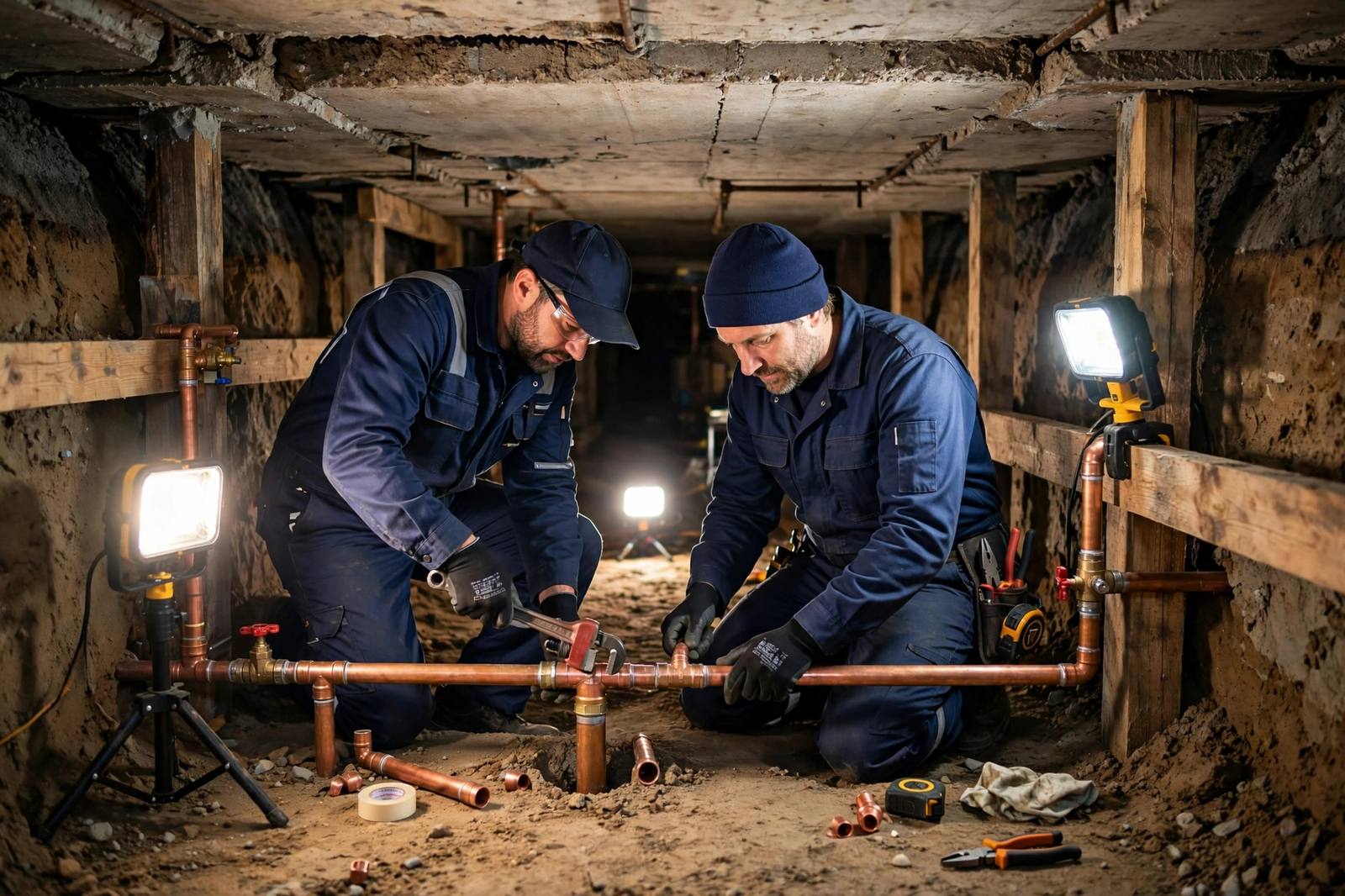
Tunneling means digging a horizontal tunnel beneath the foundation from outside the house to reach the leaking pipe from below, leaving the slab and your floors intact. It's the premium option for high-end flooring — think travertine, hardwood, or custom tile that would cost a fortune to replace. The timeline: day one is excavation of the tunnel itself, typically 3 to 4 feet deep and just wide enough to work in, dug by hand or with compact equipment from an exterior access pit. Day two is the actual pipe repair or replacement from below. Days three and four cover backfilling the tunnel in compacted lifts, which is critical — poorly compacted backfill can lead to slab settlement later. Cost is the trade-off: $4,000 to $8,000 or more, roughly double a spot repair, because you're paying for skilled hand excavation. Tunneling adds days compared to spot repair but saves the flooring above, which on an expensive floor can be the cheaper total project. Not every leak is a tunneling candidate: the soil has to cooperate (rocky or high-water-table soils can rule it out), and there must be a sensible exterior access point. Your contractor should explain why tunneling was recommended over the cheaper options — 'to save your floors' is a legitimate reason only if the floors are actually worth saving. Tunneling contracts should spell out three things beyond price: the shoring plan that keeps the tunnel from collapsing during work, the backfill specification (compacted in 6-inch lifts is the professional standard), and yard restoration — who regrades, resods, or repaves the access area. Get the settlement warranty in writing with a clear term, typically one to five years, and confirm it covers both the tunnel backfill and any slab movement traceable to the work. Verbal promises on backfill quality are worthless six months later.
Full Repipe: 2 to 5 Days for the Plumbing Work
Some homeowners, especially those with 30-plus-year-old copper systems showing systemic pinhole leaks, skip the whack-a-mole of individual repairs and repipe the whole house. A full repipe takes 2 to 5 days of plumbing work: two days for a small single-story home with accessible attic space, up to five for a large two-story with slab-on-grade and limited access. The crew runs new PEX or copper lines through walls and ceilings, abandons the old under-slab lines, and pressure-tests the new system. Cost typically lands between $4,500 and $15,000 depending on house size, pipe material, and fixture count. The plumbing timeline is only half the story, though — drywall patching, texture matching, and repainting every access point usually takes another 3 to 7 days with a separate crew. All-in, plan on one to two weeks from first pipe cut to final paint touch-up. The payoff is a decades-long solution: new PEX systems carry 25-year manufacturer warranties, and you never worry about the next under-slab leak because there is no more under-slab pipe. If you've had two or more slab leaks in three years, run the math on repiping versus your cumulative repair bills — the repipe often wins by year three. A repipe is also the natural moment for upgrades that are cheap during the work and expensive later: adding a whole-house shutoff manifold with individual fixture valves, installing water hammer arrestors, upsizing a chronically undersized main, or roughing in lines for a future bathroom or outdoor kitchen. Each add-on typically costs a few hundred dollars during the repipe versus over a thousand as a standalone job. Discuss the wish list before the contract is signed, not after walls are closed.
What Makes a Slab Leak Job Run Long
Five factors add days to even simple jobs. First, permits: some municipalities require a plumbing permit for any under-slab work, and permit review can add 3 to 10 business days before work starts — ask your contractor on day one whether your job needs one. Second, water damage and drying: if the leak ran undetected for months, saturated soil and sub-slab moisture may require professional drying with dehumidifiers and air movers for 3 to 7 days before concrete can be patched or flooring reinstalled. Third, mold remediation: the EPA notes mold can begin growing within 24 to 48 hours on wet materials, and if remediation is needed it runs on its own 2-to-5-day timeline with containment. Fourth, flooring: standard tile from a big-box store can be replaced in a day once concrete cures, but discontinued or custom tile may take weeks to source — photograph and identify your flooring early. Fifth, access surprises: leaks under load-bearing walls, post-tension slabs (common in newer construction, where cutting cables is dangerous and requires an engineered plan), or leaks beneath built-in cabinetry all add time. A good contractor flags these in the estimate instead of discovering them mid-job. Your best defense against timeline creep is a written scope that separates plumbing days from restoration days, so you know exactly whose schedule is slipping if things run long. If your home is in an HOA community or a historic district, add approval time to the front end. Some HOAs require architectural review for exterior excavation (tunneling access pits) or visible changes, and historic districts may restrict methods. Most approvals take one to three weeks. Your contractor has likely worked in your neighborhood before — ask how long approvals took on their last three local jobs, and get the permit and HOA applications filed the same week as the detection visit so nothing waits on paperwork.
Talk to a Slab Leak Pro
Reading is good. A pinpoint diagnosis is better — thermal imaging and acoustic equipment find your leak within inches.
☎ Call (877) 762-1902Frequently Asked Questions
Can I stay in my home during slab leak repair?
Usually yes. For spot repairs and reroutes, water is typically off for 4 to 8 hours during the workday and restored each evening. Tunneling is noisier and dustier but doesn't require moving out. You'll only need temporary relocation if there's extensive mold remediation or if multiple bathrooms are out of service simultaneously.
How long does slab leak detection take?
A professional detection visit takes 2 to 4 hours, including pressure testing, acoustic listening, and thermal imaging. Pinpointing the leak within a foot or two is what keeps the repair itself on a one-day timeline.
Does concrete need time to cure after a slab leak repair?
Yes. A re-poured concrete patch needs 24 to 48 hours to cure before flooring can be reinstalled. Quick-set mixes can shorten this, but rushing flooring over green concrete risks cracks and hollow spots later.
How long until my floors look normal again?
For spot repairs, plan 3 to 5 days total: one day for plumbing, 1 to 2 days of concrete cure, then flooring. If your tile is discontinued or custom, sourcing replacements can add weeks — identify your flooring material early.
Will I be without water during the repair?
Only the affected line is shut off, and typically just during work hours. Most homeowners have full water service back each evening. A whole-house repipe may mean one overnight without water, which your contractor should warn you about in advance.
How fast can a plumber start slab leak repair?
Detection visits are often available same-day or next-day. Emergency reroutes can begin within 24 to 48 hours of diagnosis. The main delay is permits — some cities require 3 to 10 business days of review before under-slab work can begin.
Related Guides
Slab Leak Repair Options: 4 Methods Compared
Slab leak repair options compared: spot repair, tunneling, reroute and repipe. Real costs ($500-$15,000), pros, cons, and how to c…
Slab Leak: Tunneling vs Rerouting — Which Is Better?
Tunneling vs rerouting for slab leaks: real costs ($4k-$8k vs $2.5k-$6k), timelines, disruption, and when each method wins. Honest…
How Plumbers Find Slab Leaks: 5 Detection Methods Explained
How do plumbers find slab leaks? Acoustic listening, thermal imaging, tracer gas, pressure tests and cameras explained — methods, …