Slab Leak Detection & Repair in Atlanta, GA
A slab leak is one of the most destructive plumbing problems an Atlanta homeowner can face, and one of the hardest to find without the right equipment. When a copper water line buried in your concrete foundation develops a pinhole leak, pressurized water erodes the soil beneath your home, and the first sign is often a water bill that has doubled for no reason. Atlanta's mix of aging ranch homes, slab additions on older houses, and dense Georgia red clay makes the metro especially vulnerable. From Buckhead to Grant Park, we help homeowners find hidden leaks fast with electronic listening equipment, acoustic sensors, and thermal imaging — pinpointing the leak within inches so repairs are surgical instead of exploratory. If your floor feels warm in one spot, you hear water running with every tap off, or your water meter spins when nothing is in use, don't wait. Call the same day you notice the problem, and we'll confirm whether you have a slab leak — and map out the fix — in a single visit.
Neighborhoods We Serve in Atlanta
Buckhead, Midtown, Virginia-Highland, Grant Park, Inman Park, Old Fourth Ward, West End, Ansley Park, Brookhaven, East Atlanta — and every ZIP code in between.
Why Atlanta Homes Get Slab Leaks
Much of Atlanta sits on dense Georgia red clay, a moisture-sensitive soil that swells during wet springs and shrinks in dry late summers. That seasonal movement shifts concrete slabs, stressing the copper supply lines embedded in them. Add the region's slightly acidic clay soil chemistry, and those copper lines face exterior corrosion on top of mechanical stress. It's the reason slab leaks are so common across intown Atlanta and the older suburbs — the ground itself works against your plumbing.
Why Atlanta Homes Get Slab Leaks
Understanding why your home is at risk starts with Atlanta's unusual housing mix. Unlike cities where every house sits on the same foundation type, the Atlanta metro blends slab-on-grade, crawlspace, and basement construction — often on the same street. The highest-risk homes are the ranch houses and split-levels built from the 1950s through the 1980s that sit directly on slabs, many of them in areas like Grant Park, East Atlanta, and West End. A second, less obvious group: older intown homes in Virginia-Highland, Inman Park, or the Old Fourth Ward that have slab additions, enclosed porches, or garage conversions — the original house may be on piers, but the addition sits on a slab with water lines running right through it. A third group is the newer slab-on-grade subdivisions stretching into Sandy Springs and Brookhaven, where production-built copper systems are now reaching the age when pinhole leaks appear. Beneath all of them is Georgia red clay, which expands in Atlanta's wet springs and contracts during dry late summers. That annual heave-and-settle cycle flexes the slab, and the copper lines embedded in it work-harden and eventually crack or develop pinhole failures. The clay's chemistry matters too: slightly acidic, moisture-holding red clay corrodes copper from the outside in, a process accelerated by stray electrical currents and high mineral content in municipal water. Homes with 40- to 60-year-old original copper, especially those that have already had one pinhole leak repaired, are the likeliest candidates for another.
Signs of a Slab Leak in Atlanta Homes
Slab leaks rarely announce themselves loudly, so Atlanta homeowners need to know the quiet symptoms. The classic early warning is a water bill that jumps 30 to 50 percent or more with no change in usage — many intown customers tell us they assumed a rate increase before discovering a leak. A warm or hot spot on the floor is the most specific sign of all, and it points to a hot-water line leak: walk your tile or hardwood in bare feet in the morning, and if one patch feels noticeably warmer, pay attention. You may also hear water running or hissing behind a wall when every faucet is off, especially late at night when the house is quiet. Check your water meter: turn off everything in the house, including the ice maker, and watch the meter for ten minutes — any movement means water is escaping somewhere. Floors that buckle, stain, or develop hairline cracks over the winter can indicate soil erosion beneath the slab, and doors that suddenly stick may signal slab shifting from washed-out soil. Don't ignore mildew smells in rooms that have never had moisture problems; a slow slab leak can feed mold growth inside wall cavities long before you see standing water. In Atlanta's humid climate, homeowners often blame condensation for damp smells, but if the smell is localized to one area near the slab line, a leak is more likely. One more red flag: your water heater runs more often than it should, because a hot-side leak constantly draws heated water.
How We Detect Slab Leaks in Atlanta
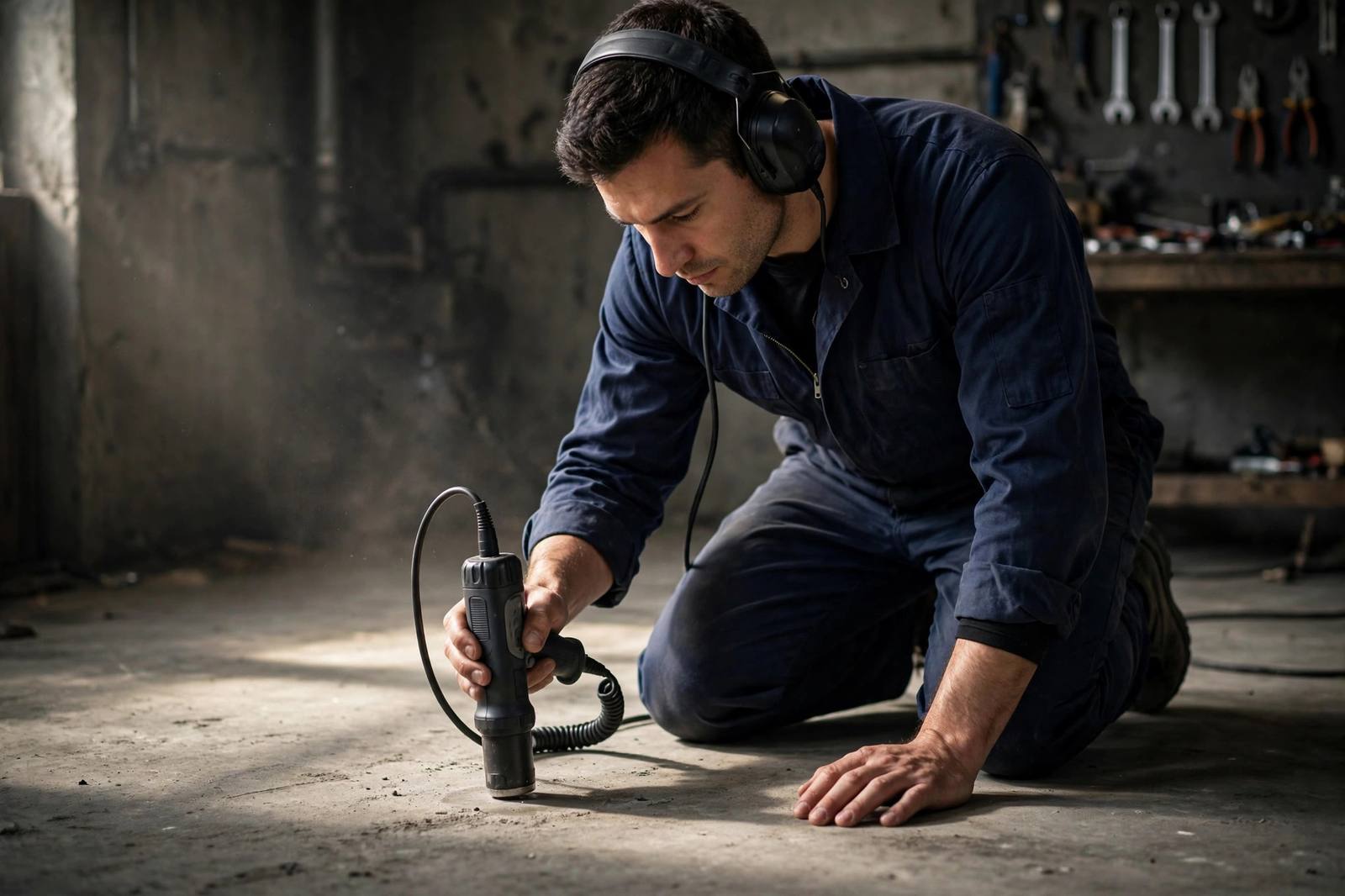
Pinpointing a slab leak without tearing up your home is a technical process, and it's where the right equipment makes all the difference. When our Atlanta technicians arrive, the first step is a pressure test on your supply lines to confirm whether the system is actually losing water — this separates true slab leaks from meter errors or irrigation leaks, which are common in neighborhoods like Ansley Park and Buckhead where older sprinkler systems abound. If pressure is dropping, we switch to electronic acoustic listening equipment: highly sensitive ground microphones that pick up the pressurized hiss of escaping water through the concrete. By comparing sound intensity at multiple points, we can triangulate the leak's position to within inches. For hot-water line leaks, thermal imaging cameras scan the floor for the distinctive heat bloom where hot water is pooling under the slab — a method that works particularly well on the tile and stone floors common in Midtown condos and Buckhead homes. When lines are complex or multiple leaks are suspected, we can introduce a trace gas (a harmless nitrogen-hydrogen mix) into the line and use a gas sniffer at the surface to find exactly where it escapes. We also verify by checking the water meter with all fixtures isolated and by examining exterior hose bibs and cleanouts to rule out non-slab sources. The whole detection visit typically takes one to two hours, and you get a precise location — not a guess — so any repair is targeted rather than exploratory. That precision is what keeps your costs down and your flooring intact.
Slab Leak Repair Options in Atlanta
Once the leak is located, Atlanta homeowners generally choose between three repair strategies, and the right one depends on the leak's location, the pipe's age, and your budget. Spot repair is the most direct approach: we open the slab at the pinpointed location, cut out the failed section of copper, and replace it. It makes sense for a single leak in an otherwise healthy system — say, one pinhole in a 25-year-old line — and it's the least expensive option, though it carries the reality that a second pinhole may appear elsewhere in the same aging system. Pipe rerouting is the most popular choice for Atlanta's older ranch homes: instead of breaking concrete, we abandon the leaking under-slab line and run a new line overhead through walls or the attic. Reroutes avoid slab demolition entirely, keep your flooring untouched, and give you a brand-new line with decades of life. They're especially smart in homes where the original copper has already produced two or more leaks. The third option is tunneling: from outside the foundation, we dig a tunnel beneath the slab to reach the leak, repair it, and backfill. Tunneling is ideal when the leak sits under an expensive finished floor — hardwood, marble, or custom tile you'd rather not destroy — or under an area like a bathroom where opening the slab from above is impractical. Each option has trade-offs in cost, disruption, and longevity, and we walk you through all three with exact pricing before any work begins, so you choose with full information rather than pressure.
What Slab Leak Detection & Repair Costs in Atlanta
Cost is the first question most Atlanta homeowners ask, so here are realistic local numbers. Professional slab leak detection in Atlanta typically runs $175 to $450 for a full visit with acoustic and thermal equipment — the price varies with the size of the home and how complex the line layout is, since a 4,000-square-foot Buckhead home takes longer to survey than a 1,400-square-foot Grant Park ranch. Be wary of anyone offering detection for far less; without the right equipment, a cheap visit usually ends in exploratory demolition. Repair costs depend on the method. A straightforward spot repair through the slab generally lands between $2,300 and $4,000 in the Atlanta market, including concrete cutting, pipe replacement, and slab patch-back. A reroute — the most common choice for aging copper — typically runs $2,800 to $5,500, depending on how far the new line must travel and how many walls need to be opened and refinished. Tunneling is the premium option, usually $4,500 to $6,800 or more, because of the labor involved in hand-digging beneath the foundation; it earns its price when it saves a $10,000 hardwood floor. A few factors push costs higher: leaks under bathrooms or kitchens, multiple simultaneous leaks, and homes where the original plumbing predates modern standards. On insurance, many Atlanta homeowners don't realize that while the leak detection and the water damage restoration are often covered by a standard homeowner's policy, the actual pipe repair itself is frequently excluded — we'll document everything so your claim has the best chance. Always get the detection done first; knowing the leak's exact location is what lets you get apples-to-apples repair quotes.
What to Do When You Suspect a Slab Leak
If the signs are pointing to a slab leak, the worst thing you can do is wait and hope it resolves itself — it won't, and every week of delay means more eroded soil and a bigger repair. Start by doing the ten-minute meter test: turn off every water source in the house, note the meter reading, wait ten minutes, and check again. Any movement confirms a leak somewhere in your system. Next, locate your main shutoff valve — in most Atlanta homes it's near the front of the house or at the meter box — and make sure you can turn it. If a pipe has burst rather than pinhole-leaked, shutting off the water fast is the difference between a repair and a renovation. Then call for professional detection the same day; Atlanta's clay soil holds water against the slab, so erosion and mold risk compound quickly in our humidity. While you wait, take photos of any stains, cracks, or buckled flooring for your insurance file, and note when you first noticed each symptom — dates matter for claims. Don't start jackhammering anything yourself or let a general handyman go exploratory; we've repaired plenty of Atlanta homes where someone turned a single pinpointable leak into five holes by guessing. And if you have a home warranty, read the fine print now: most exclude slab leaks or cap coverage well below actual repair cost. The right sequence is simple: confirm with the meter, shut off water if it's severe, get professional acoustic detection, then choose a repair method with the leak's exact location in hand.
Get a Pinpoint Diagnosis in Atlanta
No jackhammer guesswork. Thermal imaging + acoustic equipment finds your leak within inches.
☎ Call (877) 762-1902Atlanta Slab Leak FAQs
How much does slab leak detection cost in Atlanta?
Professional detection with acoustic listening and thermal imaging typically costs $175 to $450 in Atlanta, depending on home size and line complexity. The visit usually takes one to two hours and pinpoints the leak within inches, which keeps your repair costs down by avoiding exploratory demolition.
Are slab leaks common in Atlanta?
Yes, quite common. Georgia red clay expands and contracts with Atlanta's wet springs and dry summers, stressing copper lines in concrete slabs. Add slightly acidic soil chemistry corroding pipes from the outside, plus thousands of 1950s–1980s ranch homes on slabs, and the metro sees slab leaks at a high rate.
My Atlanta home is on a crawlspace — can I still get a slab leak?
You can if any part of your home sits on a slab. Many older intown homes have slab additions, enclosed porches, or garage conversions with water lines running through the concrete. The leak risk applies to any slab section, even when the main house is on piers or a crawlspace.
Should I repair the leak under the slab or reroute the pipe?
For a single leak in a relatively young system, a spot repair through the slab is usually fine. But if your Atlanta home has 40-plus-year-old copper and has already had a leak or two, rerouting the line overhead is the smarter long-term fix — it avoids breaking concrete and gives you a brand-new line.
Does homeowners insurance cover slab leaks in Georgia?
Often partially. Most standard Georgia policies cover the water damage caused by the leak and sometimes the detection cost, but the actual pipe repair is frequently excluded as wear and tear. Document everything with photos and detection reports to support your claim, and check your policy's specifics before filing.
How long does slab leak repair take in Atlanta?
Detection takes one to two hours. A spot repair is usually a one-day job. Reroutes typically take one to two days depending on line length, and tunneling can take two to three days. We give you an exact timeline once the leak is located, before any work starts.
Nearby Cities
Keep Learning
Can a Slab Leak Be Fixed Without Breaking Concrete?
Can a slab leak be fixed without breaking concrete? Yes. Rerouting, epoxy lining, and tunneling explained with real costs, timelin…
Hot Spot on Your Floor? How to Tell If It's a Slab Leak
Warm spot on your tile or floor? Learn how to tell if it's a hot water slab leak — DIY confirmation tests, pro detection, repair o…
How Long Does Slab Leak Repair Take? Realistic Timelines
How long does slab leak repair take? Spot repairs: 1 day. Reroutes: 1-2 days. Tunneling: 2-4 days. Realistic timelines, costs, and…