Can a Slab Leak Be Fixed Without Breaking Concrete?
The words every homeowner dreads hearing are 'we need to break through your slab.' Visions of jackhammers, dust-filled rooms, and destroyed tile floors follow immediately. Here's the good news: in most cases, breaking concrete is a choice, not a necessity. Three established methods fix slab leaks without touching your slab at all — rerouting the line overhead, lining the pipe with epoxy from the inside, or tunneling beneath the foundation to reach the pipe from below. Each has real trade-offs in cost, timeline, and suitability, and none is right for every situation. Rerouting ($2,500 to $6,000) abandons the leaking line and runs new pipe through walls and attic. Epoxy lining ($80 to $250 per linear foot) creates a new pipe inside the old one. Tunneling ($4,000 to $8,000+) digs under the foundation to repair the pipe from below. This guide explains exactly how each no-break method works, what it costs, when it's the right call — and the situations where breaking concrete genuinely is the best option, so you can tell the difference between honest advice and a sales pitch.
- The Short Answer: Yes, Three Proven Ways
- Method 1: Rerouting — Abandon the Line, Run New Pipe Overhead
- Method 2: Epoxy Lining — A New Pipe Inside the Old One
- Method 3: Tunneling — Repair From Below, Floors Untouched
- When Breaking Concrete Actually Is the Best Option
- Comparing Your No-Break Options Head to Head
- Questions to Ask Before Choosing a No-Break Method
The Short Answer: Yes, Three Proven Ways
Yes — and it's done every day. The three no-break methods are rerouting, epoxy pipe lining, and tunneling, and together they cover the large majority of residential slab leaks. Rerouting is the most common: the plumber caps off the leaking under-slab line and runs a new PEX or copper line through interior walls, ceilings, or attic space. No concrete work, no excavation, no dust from jackhammers — just drywall openings that get patched and painted afterward. Epoxy lining takes a different approach: instead of abandoning the old pipe, a contractor cleans its interior and applies a cured epoxy coating that seals leaks from the inside, essentially building a new pipe within the old one. Tunneling goes under the foundation rather than through it: an exterior pit is dug, a horizontal tunnel is hand-excavated beneath the slab, and the pipe is repaired from below while your floors stay untouched. All three are established, code-compliant methods performed by licensed plumbers — not experimental workarounds. The reason many homeowners don't hear about them is that some contractors only offer one method. A jackhammer-and-patch shop has no incentive to mention rerouting. Always ask explicitly: 'What are my options that don't involve breaking the slab?' The answer reveals a lot about who you're dealing with. When interviewing contractors, ask this exact question: 'What are my options that don't involve breaking the slab, and why would or wouldn't each work for my job?' The phrasing matters — it forces a method-by-method answer instead of a sales pitch for whatever equipment they own. A contractor who genuinely evaluates all three no-break methods against your pipe condition, flooring, and soil is giving professional advice; one who waves them off without specifics is selling. Get at least two quotes from companies offering different primary methods.
Method 1: Rerouting — Abandon the Line, Run New Pipe Overhead
Rerouting is the workhorse of no-break slab leak repair. The process: the plumber identifies the leaking line, shuts it down, and caps it at both ends so it's permanently isolated. Then a new line — usually PEX for its flexibility and corrosion resistance — is run from the water source to the fixtures, routed through interior wall cavities, ceiling joists, or attic space. Openings are cut in drywall at strategic points to feed the pipe through, then patched, textured, and painted. A single-line reroute takes 1 to 2 days and costs $2,500 to $6,000 depending on distance and complexity. The method's greatest strength is strategic: it permanently removes pipe from the under-slab environment that caused the failure. Expansive soil, corrosive groundwater, concrete abrasion — none of them can touch a pipe running through your attic. That's why rerouting is the default recommendation for older homes with systemic copper corrosion: you're not fixing one leak, you're retiring the failure zone. Considerations: in freezing climates, attic runs need insulation to code and are sometimes routed through conditioned space instead. Drywall restoration is a separate phase, typically 2 to 4 days. And some homeowners need to make peace with abandoning pipe in the slab — which is standard practice, fully code-compliant, and structurally irrelevant. Code details for reroutes vary by climate zone, and this is where cheap quotes cut corners. The International Residential Code requires water lines in unconditioned spaces to be protected from freezing — in practice this means insulation meeting local R-value requirements and, in severe climates, routing through conditioned space or adding heat trace. Ask to see the freeze-protection plan for your specific attic or crawlspace. An uninsulated PEX line in a cold-climate attic is a burst pipe waiting for winter.
Method 2: Epoxy Lining — A New Pipe Inside the Old One
Epoxy lining is the least invasive option of all. Rather than abandoning or excavating around the old pipe, a certified contractor rehabilitates it from the inside. First the pipe interior is abrasively cleaned down to bare metal, removing corrosion and scale. Then epoxy resin is applied — sprayed in coats by a pull-through spray head or installed as a cured-in-place liner — and allowed to cure for 12 to 24 hours into a hard, seamless inner pipe 1 to 3 millimeters thick. The result seals pinhole leaks and covers corroded areas without opening more than a few small access points. Typical cost is $80 to $250 per linear foot, with most residential jobs landing at $120 to $180 per foot — a partial lining of problem zones often runs $3,000 to $6,000. Timeline is 1 to 2 days plus cure time. The method's constraint is candidacy: epoxy needs a structurally intact host pipe. A camera inspection comes first, and collapsed sections, bellies, or heavily deteriorated pipe disqualify the job — industry experience suggests 15 to 25 percent of evaluated homes don't qualify. When the pipe does qualify, lining is the gentlest fix available: no concrete broken, no tunnel dug, minimal drywall opened. Just verify the installer's certification and the resin's NSF/ANSI 61 potable-water rating, because this is your drinking water system. Sectional lining is worth knowing about as a middle path: instead of lining the entire system, the contractor lines only the failing zone — say, the 20 feet of under-slab hot line with pinhole history. Sectional jobs often run $2,500 to $5,000 and can be the most economical no-break fix when the rest of the system tests healthy. The trade-off is candidacy risk concentrated in one zone and the knowledge that unlined sections remain original pipe. For a first leak in an otherwise sound system, it's a legitimate option.
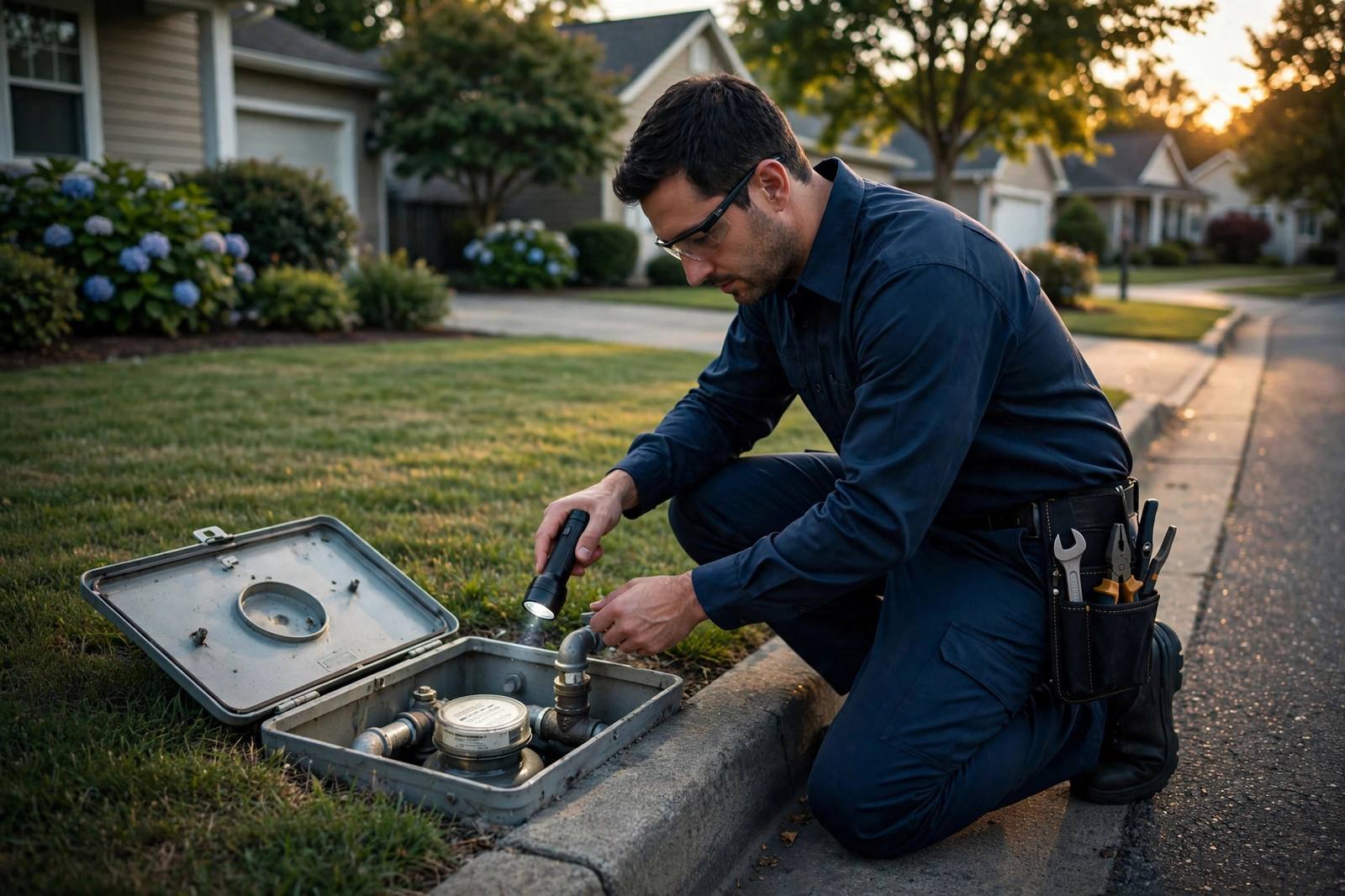
Method 3: Tunneling — Repair From Below, Floors Untouched
Tunneling is the premium no-break option, chosen when the floors above the leak are worth more than the extra cost. Instead of going through the slab, the crew digs an exterior access pit and hand-excavates a horizontal tunnel — typically 3 to 4 feet deep — beneath the foundation to reach the leaking pipe from underneath. The repair happens in the tunnel: the damaged section is cut out and replaced, connections are made, and the line is pressure-tested. Then the tunnel is backfilled in compacted lifts — the critical quality step, since poorly compacted backfill can settle and cause slab movement over time. Cost runs $4,000 to $8,000 or more, roughly double a spot repair, because hand excavation is slow, skilled labor. Timeline is 2 to 4 days. Tunneling makes financial sense when breaking the slab would destroy expensive flooring: a $15,000 travertine floor turns a $3,000 spot repair into a $10,000-plus project, making the $7,000 tunnel the bargain. It's also the engineered choice for post-tension slabs, where cutting concrete risks severing tension cables. Limitations: the soil must cooperate — rocky ground or high water tables can rule it out — and you need sensible exterior access. Always get the backfill compaction plan and a written settlement warranty (1 to 5 years is standard from reputable firms). Tunneling below the water table requires dewatering — pumping water out of the excavation continuously during the work. This is routine for experienced tunneling crews but adds $500 to $2,000 and complexity, and in some jurisdictions requires a dewatering permit or discharge plan for the pumped water. If your contractor mentions a high water table, ask how they handle dewatering and whether it's in the quote. A crew without a dewatering plan in wet soil is a crew that hasn't tunneled in wet soil.
When Breaking Concrete Actually Is the Best Option
No-break methods aren't universal. Breaking the slab is genuinely the best option in several situations. First, when the leak is directly under an area with cheap, easily replaced flooring — a garage, utility room, or basic tile — the economics flip: a $1,500 to $4,000 spot repair beats a $6,000 reroute when there's nothing expensive to protect. Second, when the pipe layout makes rerouting impractical: some homes have convoluted plumbing paths where an overhead reroute would require opening half the house, making a targeted slab opening simpler. Third, sewer line leaks under the slab: drain lines can't be rerouted through attics the way water lines can (gravity and venting requirements), so under-slab sewer repairs usually mean breaking concrete or tunneling — there's no overhead option. Fourth, when the leak location is precisely known and isolated in otherwise young, healthy pipe: a single clean spot repair is the fastest, cheapest correct fix, and upselling a full reroute would be wasteful. The key distinction: 'we need to break concrete' is honest when it's tied to your specific situation — cheap flooring, sewer line, precise isolated leak — and it's a sales pitch when it's presented as the only option without evaluating the alternatives. A trustworthy contractor explains why the other methods don't fit your job. Sewer camera inspection is the diagnostic that decides the sewer question. A plumber feeds a camera through the drain line to locate breaks, bellies, root intrusion, or separations under the slab. The inspection costs $200 to $500 and the video is yours to keep — get quotes from at least two sewer repair contractors against the same footage, because sewer repair pricing varies wildly. If the camera shows a single clean break, a spot repair through the slab is usually the honest fix; widespread deterioration points to full replacement.
Comparing Your No-Break Options Head to Head
Here's how the no-break options stack up. Cost: rerouting $2,500 to $6,000 is usually cheapest; epoxy lining $80 to $250 per linear foot lands in the middle for partial jobs; tunneling $4,000 to $8,000+ is the premium. Timeline: rerouting and lining take 1 to 2 days of trade work; tunneling takes 2 to 4 days. Disruption: lining is gentlest (few openings), rerouting is messiest indoors (drywall dust throughout), tunneling is messiest outdoors (excavation, yard restoration). Permanence: rerouting and repiping permanently remove pipe from the slab environment — the strongest long-term answer for systemic corrosion. Lining rehabilitates existing pipe but leaves the old system in place. Tunneling repairs one leak in aging pipe without addressing the rest of it. Flooring protection: tunneling is the only method that guarantees zero impact on floors; rerouting and lining come close but may need small openings. Candidacy: rerouting works almost anywhere; lining requires structurally sound pipe (15 to 25 percent of homes don't qualify); tunneling requires cooperative soil and exterior access. For the common case — an older home with copper pinhole leaks and standard flooring — rerouting usually wins on cost, permanence, and simplicity. For expensive floors, tunneling. For minimal disruption on qualifying pipe, lining. Match the method to your situation, not to the contractor's equipment. The decision matrix in one paragraph: isolated leak plus cheap flooring equals spot repair through the slab; isolated leak plus expensive flooring equals tunneling; systemic corrosion plus standard construction equals rerouting or repipe; qualifying pipe plus minimal-disruption priority equals epoxy lining; sewer line failure equals camera inspection then targeted repair. Any contractor whose recommendation doesn't change with these variables isn't diagnosing — they're defaulting. Your job is to supply the variables and demand a recommendation that responds to them.
Questions to Ask Before Choosing a No-Break Method
Candidacy comes first: ask to see the camera footage before agreeing to epoxy lining, ask how the contractor assessed your soil and water table before agreeing to tunneling, and ask what in your home's layout could complicate a reroute. Vague answers are disqualifying. Warranties come second: what exactly is covered — the pipe, the liner, the tunnel backfill — for how long, and is the warranty transferable if you sell the house? Get the term in years, in writing. Restoration scope comes third: is drywall repair, painting, concrete patching, or yard restoration included in the quote or billed as a separate allowance, who performs it, and on what schedule? A quote that excludes restoration isn't comparable to one that includes it. Fourth, permits and inspections: will the contractor pull required permits, are inspection fees included, and what happens to the timeline if the city is slow? Fifth, the contingency question: what happens if the crew opens things up and finds a second leak, or if your pipe fails lining candidacy after cleaning has begun — do you pay for the wasted work? Finally, price structure: is this fixed-price or time-and-materials, and what specifically triggers a change order? The quality of the answers matters as much as their content. A contractor who welcomes detailed questions is confident in their work; one who rushes past them or gets defensive is telling you everything you need to know before you sign. Finally, ask for references from the last three jobs using the recommended method — and actually call them. Past customers will tell you what the sales process won't: whether the timeline held, whether restoration was really included, and whether the crew left the house clean.
Talk to a Slab Leak Pro
Reading is good. A pinpoint diagnosis is better — thermal imaging and acoustic equipment find your leak within inches.
☎ Call (877) 762-1902Frequently Asked Questions
How much does it cost to fix a slab leak without breaking concrete?
Yes, depending on the situation. Rerouting runs $2,500 to $6,000, epoxy lining $80 to $250 per linear foot, and tunneling $4,000 to $8,000+. The cheapest no-break option is usually a reroute; the right one depends on your pipe condition and flooring.
Is it safe to leave the old leaking pipe under the slab?
Yes. Abandoned lines are capped at both ends, pressure-tested to confirm isolation, and left in place. This is standard, code-compliant practice nationwide and poses no structural or health risk.
How long does a no-break-concrete repair take?
Usually 1 to 2 days for the plumbing work, versus 2 to 4 for tunneling. Neither method breaks concrete, so there's no cure time — but rerouting adds drywall patching and painting afterward, typically 2 to 4 more days.
My plumber says breaking the slab is the only option. Is that true?
Get a second opinion from a contractor who offers multiple methods. Single-method shops recommend what they sell. A second quote that includes rerouting or lining gives you a real comparison.
Will rerouted pipes freeze in winter?
Yes. Rerouted lines in unconditioned attics must be insulated to local code, and in freezing climates they're often routed through interior walls instead. A good contractor plans freeze protection explicitly — ask about it before signing.
Does epoxy lining stop future leaks everywhere?
Partially. It seals pinhole leaks and corrosion in the lined sections, but unlined branches, fittings, and transitions remain original pipe. For systemic corrosion, repiping or full rerouting is more comprehensive.
Related Guides
Slab Leak Repair Options: 4 Methods Compared
Slab leak repair options compared: spot repair, tunneling, reroute and repipe. Real costs ($500-$15,000), pros, cons, and how to c…
Slab Leak: Tunneling vs Rerouting — Which Is Better?
Tunneling vs rerouting for slab leaks: real costs ($4k-$8k vs $2.5k-$6k), timelines, disruption, and when each method wins. Honest…
Epoxy Pipe Lining vs Repiping for Slab Leaks
Epoxy pipe lining vs repiping for slab leaks: real costs ($80-$250/ft vs $4.5k-$15k), lifespan, pros, cons, and limits. Which whol…