Slab Leak Detection & Repair in Philadelphia, PA
Philadelphia is not the first city people associate with slab leaks, but the city's postwar housing tells a different story. While the classic brick rowhouses of Center City, South Philadelphia, and West Philadelphia mostly sit over basements, the great postwar build-out — the ranches and twins of Northeast Philadelphia, the slab-built homes of Roxborough and Manayunk, and newer construction across the city — put water lines directly under concrete. Add some of the oldest housing stock in America, with copper and galvanized plumbing from the 1950s through the 1970s now well into its failure window, and winters that freeze and thaw the ground repeatedly, and Philadelphia has a real slab leak problem hiding under its floors. Our Philadelphia slab leak specialists pinpoint leaks within inches using acoustic listening and thermal imaging, then fix them with options that respect your home's age and your budget, often in a single day.
Neighborhoods We Serve in Philadelphia
Center City, South Philadelphia, Fishtown, Roxborough, Manayunk, Germantown, Northeast Philadelphia, West Philadelphia, Chestnut Hill, Kensington — and every ZIP code in between.
Why Philadelphia Homes Get Slab Leaks
Philadelphia's ground is a patchwork: Wissahickon schist and gneiss in the northwest, Coastal Plain sands, silts, and clays toward the rivers, with soft fill and a high water table in former marsh areas of South Philadelphia. Dozens of freeze-thaw cycles each winter heave the soil and stress rigid pipe. The slab risk concentrates in postwar construction — Northeast Philadelphia ranches and twins, slab additions, and new builds — carrying copper and galvanized lines from the 1950s through the 1970s that are now 50 to 70 years old. River-sourced water is moderately hard, and decades of corrosion inside aging copper is how pinhole leaks begin.
Why Philadelphia Homes Get Slab Leaks
Philadelphia's ground is a patchwork, and that patchwork decides where slab leaks happen. The northwest of the city — Roxborough, Manayunk, Chestnut Hill, Germantown — sits on Wissahickon schist and gneiss, hard metamorphic rock that makes deep excavation expensive and leaves shallow, rocky soils. The central and southern city grades into Coastal Plain sediments: sands, silts, and clays deposited by ancient seas, with pockets of soft, compressible ground near the Delaware and Schuylkill rivers. Clay-rich soils in these lowlands hold water against foundations, and in South Philadelphia's former marsh and fill areas the water table can sit high enough that leaked water has nowhere to drain. Winter adds the decisive force: Philadelphia averages dozens of freeze-thaw cycles a season, and each cycle heaves the soil and stresses rigid pipe. The housing stock splits the risk. The rowhouses that define the city — built from the 1800s through the 1930s — mostly have basements, so their water lines are accessible and their leaks are not slab leaks at all. The slab risk lives in the postwar city: the ranches, twins, and Cape Cods built across Northeast Philadelphia in the 1950s and 1960s, slab additions built behind older homes, and new construction where slab-on-grade is standard. Those homes carry copper and galvanized lines that are now 50 to 70 years old. Philadelphia's water, drawn from the Delaware and Schuylkill rivers, is moderately hard, and decades of mineral and corrosion activity inside aging copper is exactly how pinhole leaks start.
Signs of a Slab Leak in Philadelphia Homes
A Philadelphia slab leak usually announces itself through the water bill first. A bill that jumps $40 to $120 with no change in household habits is the classic early warning — compare against the same month last year, since summer lawn watering muddies month-to-month comparisons. Hot water line leaks, the most common kind, show up as a warm patch on the floor that never cools, often noticed barefoot in a hallway or kitchen. Cold line leaks reveal themselves as damp carpet edges, tile grout that stays dark, baseboards pulling away from the wall, or a musty smell in one room that cleaning never fixes. In Philadelphia's rowhouses, watch the shared-wall side: a leak can migrate into a neighbor's property, and dampness on a party wall is sometimes the first sign. Exterior clues matter too — a patch of lawn that stays green through a dry August, or soil near the foundation that stays soft days after rain. Listen at night when the house is quiet: the hiss of pressurized water escaping a pinhole is often audible through the slab in a silent room. And check your meter with everything off; movement over 30 minutes means water is going somewhere it should not. In a city where many homes are attached, do not ignore dampness just because it seems minor — your leak may be your neighbor's ceiling stain next week.

How We Detect Slab Leaks in Philadelphia
Our Philadelphia detection process starts by separating the system: hot and cold lines are pressurized independently to identify which side is losing pressure, which immediately halves the search area. Acoustic listening comes next — electronic ground microphones pressed to the slab pick up the hiss of escaping water, and experienced techs know how to distinguish a real leak from the thermal expansion ticks that copper makes as it warms and cools, a common source of false alarms. Thermal cameras scan for the heat plume of a hot water leak spreading through the slab; on Philadelphia's varied soils the plume shape can hint at how long the leak has been running. Line tracing maps the actual pipe layout under your floor, which matters enormously in Northeast Philadelphia twins and ranches where original plans are long gone, and in older homes where decades of renovations have rerouted lines in undocumented ways. For suspected drain-side leaks in older properties with cast iron waste lines, we run camera inspections through cleanouts. The whole visit takes one to two hours, nothing is demolished, and you leave with a marked floor plan showing the leak location within inches — the document your repair crew and your insurer both want to see.
Slab Leak Repair Options in Philadelphia
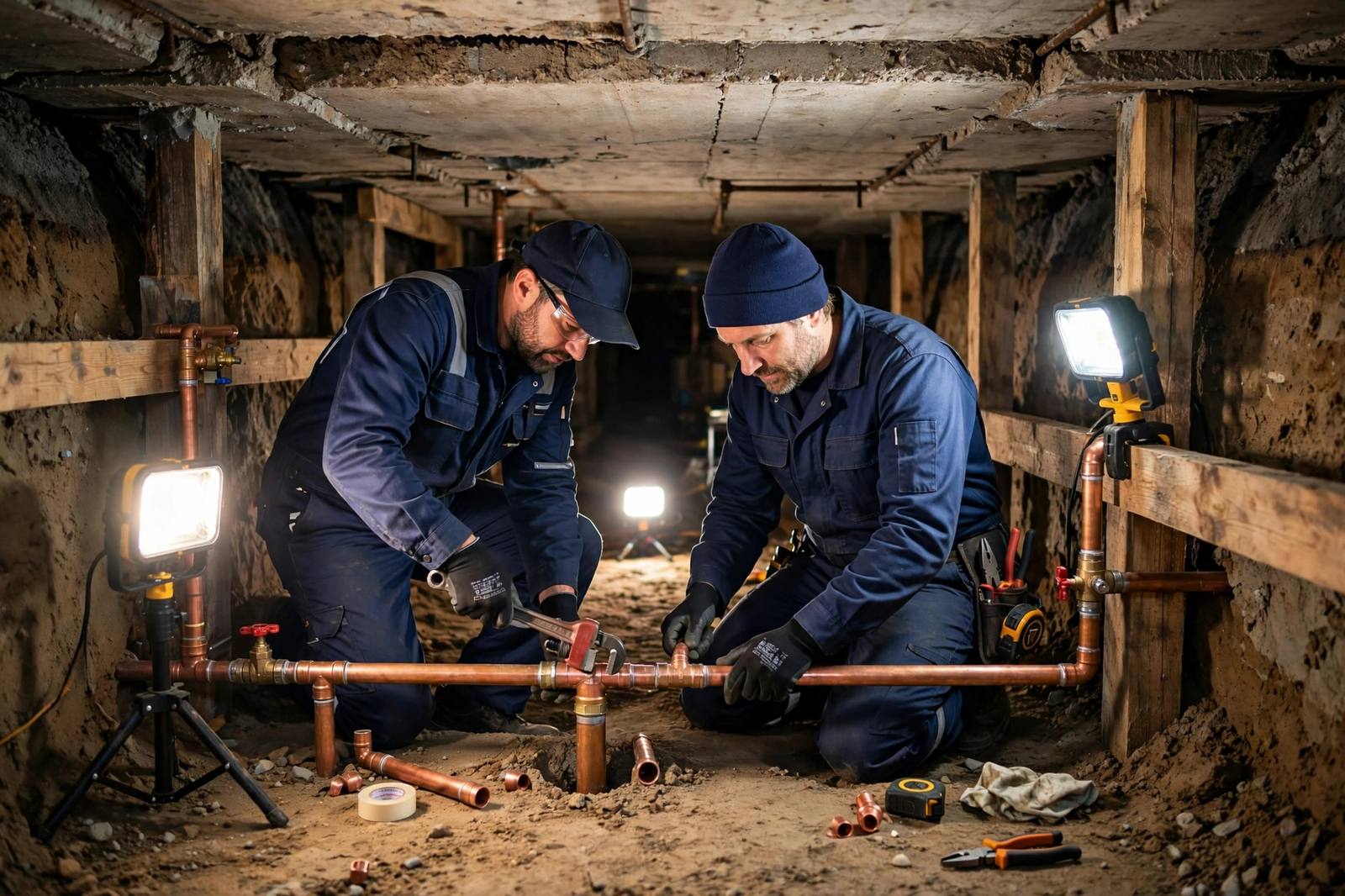
Philadelphia homeowners have four main repair paths, and the honest choice depends on pipe age and leak history. A spot repair — a small, surgical opening in the slab directly over the located leak — is right for a first leak in an otherwise sound system, and most are finished in a day with concrete and flooring restored. Tunneling is the premium option for homes with expensive flooring: we hand-dig beneath the slab from outside, repair the pipe from underneath, and your hardwood or tile is never touched. It costs more in labor but frequently wins on total cost once flooring replacement is counted. A reroute abandons the under-slab lines and runs new PEX through walls, ceilings, and basements or attics — in Philadelphia's single-story ranches and in rowhouses with accessible basements, reroutes are fast and clean, and they permanently end the slab leak cycle. A whole-house repipe makes sense when you have had two or more leaks or your copper is 50-plus years old: the highest upfront cost, but the last plumbing bill of its kind for decades. For failing cast iron drains, trenchless lining can rehabilitate the line without tearing up the slab. We lay out every viable option with real numbers, including the flooring and drywall restoration that many quotes conveniently forget, so the decision is yours.
What Slab Leak Detection & Repair Costs in Philadelphia
Detection in Philadelphia runs $175 to $450 for a complete diagnostic visit, and most companies credit it toward the repair. Spot repairs typically cost $2,500 to $4,500 all-in, including concrete work and flooring restoration — Philadelphia's labor rates run higher than Sun Belt cities, and rocky northwest soils can slow exterior excavation. Tunneling usually lands between $4,000 and $7,000 depending on tunnel length and the number of lines repaired. A full reroute of supply lines in a typical Northeast Philadelphia ranch runs $3,500 to $6,500, varying with access and finish restoration. Whole-house repipes range from $8,000 to $18,000 for most homes, higher in large rowhouses with complex layouts. What drives Philadelphia pricing up: older-home surprises — undocumented prior repairs, mixed copper and galvanized sections, and lead service lines that complicate tie-ins — and the city's permit and inspection requirements. What keeps it reasonable: intense competition among Philadelphia plumbers and the fact that many slab homes are single-story, which keeps labor hours down. Always get detection first: a $300 diagnosis routinely saves homeowners from paying for exploratory demolition that finds nothing.
What to Do When You Suspect a Slab Leak
Suspect a slab leak? Work this sequence. First, verify: turn off everything water-using in the house, record your meter reading, wait 30 minutes, and read it again. Movement means a leak. Second, locate your main shutoff and confirm it turns; in an emergency you need to stop water in seconds, and older Philadelphia homes sometimes have shutoffs seized from decades of disuse or buried behind finished basement walls. Third, if you feel a warm floor spot, shut off the cold supply to the water heater to limit hot-side losses while you wait. Fourth, call for professional detection before anyone brings a jackhammer — exploratory demolition on a hunch is the most expensive mistake in this business. While waiting, pull rugs off damp areas, run a dehumidifier, and photograph everything for your insurance file. One Philadelphia-specific caution: if you share a party wall, tell your neighbor early. A leak that migrates through a shared foundation can damage their home too, and early notice keeps a plumbing problem from becoming a neighbor dispute. And do not let a leak run through winter: freeze-thaw movement on soil already softened by leaking water can turn a plumbing repair into a foundation repair in a single season.
Philadelphia Pipe Eras: What Your Home's Age Tells You
Philadelphia's plumbing history reads like a timeline of American pipe materials, and your home's age predicts its risk better than almost anything else. Pre-1940 rowhouses typically carry galvanized steel supply lines and cast iron drains, often with lead service lines from the street — the lead service line is a health issue first and a leak issue second, and any major plumbing work in these homes should include a conversation about replacing it. The 1940s through the 1960s brought copper, and the postwar Northeast Philadelphia ranches and twins were plumbed in copper that is now 60 to 80 years old. Copper fails by pinhole corrosion: mineral scale and water chemistry thin the wall from the inside until a pinhole opens, often with no warning. The 1970s and 1980s added more copper, plus early polybutylene in some developments — polybutylene is a known failure material, and if your home has it, a repipe is not a question of if but when. Homes built from the late 1990s onward generally use PEX, which flexes instead of cracking and resists corrosion, and their slab leak risk is far lower. When our techs arrive, the first thing they ask is the year your home was built, because it tells them which failure mode to look for. If you own a pre-1990 slab home in Philadelphia, a single leak is a warning shot: budget for detection now, and plan for a reroute or repipe before the second leak arrives.
Slab Leak Help for Philadelphia Homeowners
New to slab leaks? Start with the warning signs, see what detection and repair really cost, and compare your repair options — then get local help right here in Philadelphia.
All Pennsylvania service areasSigns & Symptoms
Is it really a slab leak?Costs & Pricing
Detection & repair pricesRepair Cost Guide
Real prices by methodRepair Options
Spot repair, reroute, repipe
Get a Pinpoint Diagnosis in Philadelphia
No jackhammer guesswork. Thermal imaging + acoustic equipment finds your leak within inches.
☎ Call (877) 762-1902Philadelphia Slab Leak FAQs
How much does slab leak detection cost in Philadelphia?
Most Philadelphia homeowners pay $175 to $450 for a complete detection visit using acoustic listening, thermal imaging, and pressure testing. The visit takes one to two hours and ends with a marked floor plan showing the leak's location. Many companies credit the detection fee toward the repair when you go ahead with the fix.
Which Philadelphia neighborhoods get the most slab leaks?
Philadelphia's slab leaks concentrate in postwar slab-on-grade homes — Northeast Philadelphia ranches and twins, newer construction in South Philadelphia, and slab additions behind older rowhouses. The city's classic brick rowhouses mostly sit over basements, so their leaks are usually in basement-level lines rather than under slab. Neighborhoods like Mayfair, Tacony, and Oxford Circle, plus slab-built pockets of Roxborough and Manayunk, see the most under-slab failures.
Why are slab leaks common in Philadelphia?
Philadelphia winters are the trigger. Freeze-thaw cycles heave the ground, and uninsulated lines near slab edges in older homes are vulnerable during January cold snaps. The city also has a large stock of 1950s to 1970s copper and galvanized plumbing now reaching failure age, and the Schuylkill and Delaware river lowlands leave some soils seasonally saturated, which keeps leaked water pooled against foundations.
Will homeowners insurance cover a slab leak in Philadelphia?
Pennsylvania policies typically cover the water damage a slab leak causes — ruined flooring, drywall, and cabinets — but not the pipe repair itself, which insurers treat as wear and tear. Sudden breaks get better treatment than slow seepage, so document the date you first noticed symptoms and call for detection quickly to protect any claim.
How long does slab leak repair take in Philadelphia?
A straightforward spot repair is usually finished in one day. Tunneling jobs take two to three days of hand excavation. A full reroute or repipe runs two to four days depending on home size. Philadelphia permit and inspection timelines vary by job type, and we coordinate scheduling so inspections do not stall the work.
Do you warranty slab leak repairs in Philadelphia?
Yes. Spot repairs carry a multi-year workmanship warranty, and full repipes and reroutes come with extended warranties on labor and materials. Every repair is pressure-tested before concrete is restored, and you receive the warranty terms in writing before work begins.
Nearby Cities
Keep Learning
Slab Leak in New Construction: Is the Builder Responsible?
Slab leak in a new-construction home? Learn why it happens, what the 1-2-10 builder warranty covers, and how to make the builder p…
Slab Leak Insurance Claim Checklist: Documents That Get Claims Paid
The exact documents a slab leak insurance claim needs: timestamped photos, water bills, the detection report, itemized quotes — pl…
Slab Leak Insurance Claim Process: Step-by-Step Guide to Getting Paid
Filing a slab leak insurance claim? The step-by-step process: documentation, the detection report adjusters rely on, what gets cov…