Acoustic vs Thermal Leak Detection: How Pros Actually Pinpoint a Slab Leak
No. Neither acoustic listening nor thermal imaging finds a slab leak on its own — professional detection works because the two methods confirm each other. Thermal imaging maps where hot water is warming your floor; acoustic sensors hear exactly where pressurized water is escaping. Used together (usually with a pressure test to isolate the line), they pinpoint a leak within inches before anyone touches your concrete. Here's what each method really does, where each one fails, and why pros combine them.
📚 This guide is part of our Detection Methods hub — every guide on this topic in one place.
Thermal Imaging: A Heat Map, Not an X-Ray
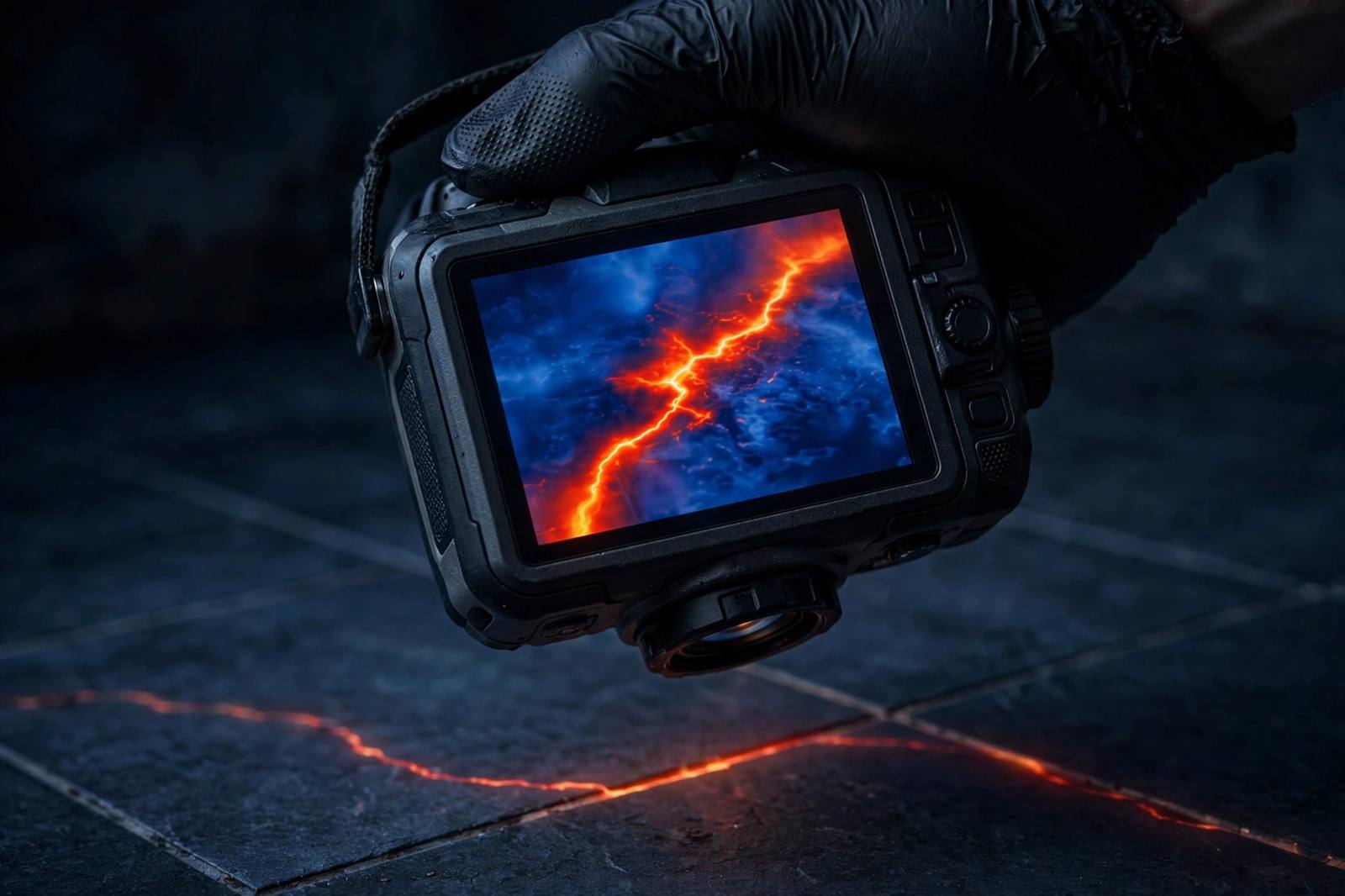
An infrared camera doesn't see water or pipes — it sees surface temperatures, rendered as color. When a hot-water line leaks under your slab, the escaping water warms the concrete and flooring above it, and that warmth blooms outward in a visible pattern: a bright plume on tile, a glowing streak along the pipe's path. For hot-side leaks, a thermal scan can map the suspect area in minutes without touching the floor.
The limits matter as much as the magic. A cold-water leak may produce almost no temperature contrast — the water under your slab is close to the soil temperature, so there's little for the camera to 'see.' Drain leaks are worse: they only flow when you use water. And plenty of innocent things create warm patterns — radiant heating lines, sun-warmed tile, refrigerator coils, even a pet's favorite sleeping spot.
That's why a thermal image is a map, not a verdict. It tells the tech where to listen closely and where to test — and any diagnosis made from a thermal image alone, especially for a cold-side leak, should be treated as a guess until another method confirms it.
Acoustic Listening: Hearing the Leak Itself
Pressurized water escaping through a crack or pinhole makes noise — a hiss, spray, or vibration that travels through the pipe and the slab. Acoustic detection equipment (ground microphones, listening discs, and correlators that compare sensors at two points) amplifies that sound so a trained tech can walk the floor and triangulate the loudest point. That point is, almost always, the leak.
Acoustic is the workhorse of slab leak detection because it answers the question the repair crew actually asks: where, exactly, do we open? In skilled hands it narrows a leak to within inches on both hot and cold supply lines. It's also the method least fooled by surface appearances — it hears the leak itself, not its side effects.
Its weaknesses are environmental. Ambient noise — traffic, HVAC, wind, a busy house — can mask a small leak's sound, and very deep pipes, thick slabs, or certain flooring materials muffle it. Low-pressure leaks are quieter than high-pressure ones. This is why appointments sometimes get scheduled for quiet hours, and why a good tech manages the environment (everything off, house quiet) before concluding anything.
Why Pros Use Both (and a Third Test)
Watch how a proper diagnosis actually unfolds and the 'versus' framing disappears — the methods are sequential filters, not rivals. First, the meter and pressure checks confirm a leak exists and which system it's on. Then isolation: valves and pressure tests separate hot from cold lines and supply from drain, shrinking the search area before any scanning starts.
Thermal imaging goes next on hot-side suspects, painting the warm zone so the tech knows roughly where the line runs and where heat concentrates. Then acoustic equipment works that zone, tightening the location from 'somewhere in this warm area' to 'here, within inches.' For stubborn cases, tracer gas (a safe helium or hydrogen mix introduced into the line and sniffed at the surface) or a sewer camera for drain-side questions completes the kit.
Each layer removes a category of error. Thermal alone can be fooled by a sunny floor; acoustic alone can chase an echo; pressure alone can't locate anything. Together they produce a marked spot the repair crew can trust — and a report that documents how the location was confirmed, which your insurer will want to see.
Which Method Wins for Which Leak
Hot water line leak: thermal imaging shines — the heat plume is usually obvious — and acoustic confirms the exact point. This is the fastest, most reliable detection scenario.
Cold water line leak: acoustic carries the job, with pressure testing to prove which line is losing pressure. Thermal contributes little; any tech who relies on a camera here isn't reading the situation.
Drain or sewer line leak: neither headline method performs well, because drain water isn't pressurized and usually isn't warm. The right tool is a sewer camera pushed through the line, plus dye or smoke testing — a reminder that 'detection' is a kit, not a single gadget.
Intermittent or very slow leaks: the challenge is catching the leak while it's active. Pressure testing and isolation valves, patiently applied line by line, do the heavy lifting; acoustic follows once the leak is provoked. If a tech shrugs at an intermittent leak, that's a reason to call a specialist rather than accept 'can't find it.'
What a Real Detection Visit Should Deliver
You don't need to own the equipment to audit the process. A credible detection visit produces: a confirmed yes/no on whether a leak exists, which line it's on, a location marked on your floor (ask them to mark it), photos or thermal images, and a written report describing how the location was confirmed. That report is not paperwork fluff — it's what a repair crew works from and what an insurance adjuster relies on.
Ask three questions before you book. 'How do you confirm a location before we open anything?' (Look for: a second method.) 'Is drain-line inspection available if it's not a supply leak?' (Look for: camera access.) 'Do I get the findings in writing with photos?' (Look for: yes, standard.)
Pricing context: a full professional diagnosis typically runs $150–$600 depending on your area and the equipment needed, and some companies credit the fee toward the repair. What you're really buying is certainty — the difference between opening one square foot of floor and opening five while someone hunts.
Common Ways Detection Goes Wrong
Three failure patterns account for most bad diagnoses. The first is single-method certainty: a thermal image alone, an acoustic reading taken in a noisy house, or a pressure test treated as a location. Each method has a known blind spot — the fix is always a confirming second method, and a tech who resists confirming is telling you how they work.
The second is testing under the wrong conditions. Acoustic surveys done at rush hour next to a busy street, or with the pool pump running, chase phantom noise. Thermal scans done on a sun-baked afternoon floor read the weather instead of the leak. Good techs control the conditions — quiet house, everything off, early scans — and will reschedule rather than guess.
The third is stopping at 'there's a leak' without isolating which line. Hot, cold, and drain leaks are fixed by different methods at very different prices, and a location without a line identification sends the repair crew in half-briefed. Your written report should name the line, the location, and the confirming method. If any of the three is missing, ask for it before the floor opens.
Talk to a Slab Leak Pro
Reading is good. A pinpoint diagnosis is better — thermal imaging and acoustic equipment find your leak within inches.
☎ Call (877) 762-1902Frequently Asked Questions
A tech diagnosed my leak from thermal imaging alone. Should I trust it?
That's a red flag. Thermal imaging shows temperature patterns at the surface — for cold-side and drain leaks it often shows nothing at all. Pros confirm thermal findings with acoustic or pressure tests before anyone opens a floor.
Is acoustic detection accurate for hot water lines?
Rarely enough on its own under a slab. A thermal camera can estimate the area from the heat spread, but pinpointing for a repair spot needs acoustic or tracer confirmation. It works best where the detector can reach the pipe directly.
What if the leak only happens sometimes?
Both need the leak active (pressurized) to perform best, which is why pressure and isolation testing — checking one line at a time — completes the picture. That's also how drain leaks, which neither method hears well, get found.
Which method costs more?
Detection typically runs $150–$600 total, and the combination is usually included in one visit price — you're paying for the diagnosis, not renting instruments. Ask whether the fee applies toward the repair.
How do I know the tech actually confirmed the spot?
You can ask for the findings in plain terms: which line, how it was confirmed, and how tight the location is. A good tech will happily explain — the report with photos is part of what you're paying for.
Can detection equipment damage my floors or pipes?
No. Acoustic sensors, thermal cameras, and pressure tests are all non-invasive — they listen, look, and measure from outside the pipe. The first tool that touches your home is the repair itself, at the confirmed spot.
Related Guides
How Plumbers Find Slab Leaks: 5 Detection Methods Explained
How do plumbers find slab leaks? Acoustic listening, thermal imaging, tracer gas, pressure tests and cameras explained — methods, …
Water Meter Test for a Slab Leak: Step-by-Step Guide + Results Table
The water meter test confirms a hidden leak in about 30 minutes with no tools. Full steps, how to read the leak indicator, and a r…
How Much Does Slab Leak Detection Cost in 2026?
Slab leak detection costs $150-$600 in 2026. Compare per-method pricing, what's included in a proper visit, cost factors, and how …